Data Center Floor Plan Denver: Optimizing Space, Power, and Cooling
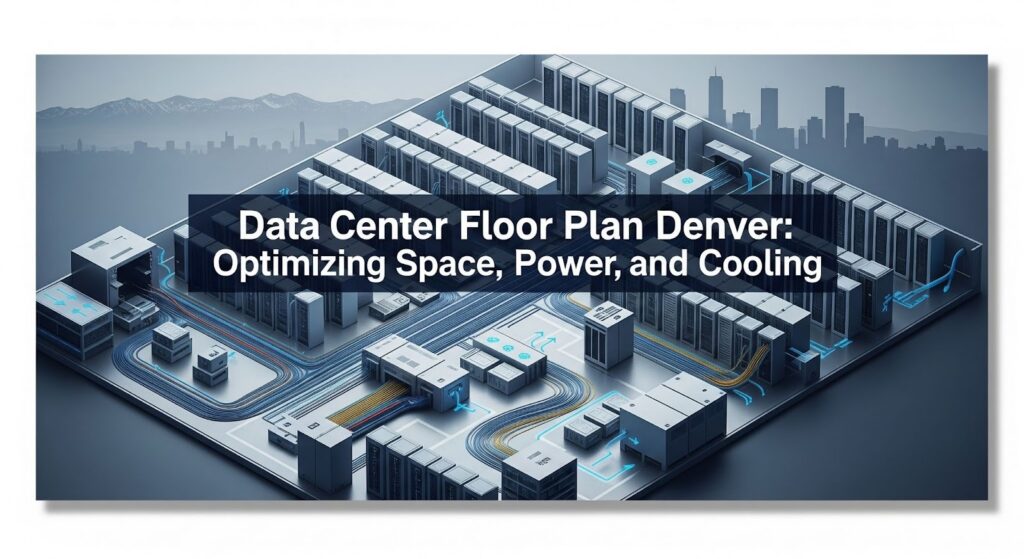
Planning a data center floor plan Denver project requires strategic thinking about space optimization, power distribution, and cooling efficiency. Denver’s growing tech landscape demands facilities that maximize every square foot while ensuring robust infrastructure performance. Whether you’re expanding existing operations or building from scratch, understanding Denver data center market dynamics and best practices will help you create a future-ready data center floor plan Denver solution.
What Makes Denver Data Center Floor Plans Unique?
Denver’s high altitude, dry climate, and growing tech ecosystem create unique opportunities for data center floor plan Denver optimization. The city’s 5,280-foot elevation provides natural cooling advantages, while its strategic location offers excellent connectivity to both coasts.
The Denver data center market includes 59 facilities with 3,918,059 square feet and 316 megawatts of capacity, making it a competitive landscape where efficient floor planning directly impacts operational costs and performance.
Key factors influencing data centers in Colorado include:
- Altitude advantages: Lower air density requires adjusted cooling calculations
- Climate benefits: Average temperatures reduce cooling loads by 15-20%
- Seismic considerations: Colorado’s low seismic activity allows for flexible layouts
- Power grid stability: Reliable utilities support high-density configurations
- Fiber connectivity: Excellent network infrastructure enables optimized cable management
Ready to optimize your data center floor plan Denver project? Contact Reboot Monkey’s expert team for professional space planning services.
How to Design an Efficient Data Center Floor Plan Denver Layout
Effective data center floor plan Denver design starts with understanding power density requirements, cooling airflow patterns, and future scalability needs. A well-planned layout can improve efficiency by 30-40% while reducing operational costs.
Space Allocation Best Practices
Modern data centers in Colorado typically allocate space using the following ratios:
| Space Type | Percentage | Purpose |
| IT Equipment | 45-55% | Server racks, storage, networking |
| Mechanical Systems | 25-30% | Cooling, power distribution, UPS |
| Support Areas | 15-20% | NOC, maintenance, storage |
| Circulation/Aisles | 5-10% | Access pathways, cable runs |
Power Distribution Planning
Efficient utilization of square footage is critical to cost management and environmental control, with high-density areas concentrated to streamline power and cooling resources. Your Denver data center floor plan should incorporate:
- Primary power feeds: Redundant utility connections from different substations
- UPS placement: Strategic positioning to minimize cable runs
- PDU locations: Balanced distribution across raised floor zones
- Emergency power: Generator placement with adequate ventilation clearances
Top Denver data center services providers like Reboot Monkey recommend planning for 150-200 watts per square foot in high-density areas, with room for 25% growth capacity.
What Are the Key Components of Denver Data Center Floor Plans?
Every data center floor plan must integrate four critical infrastructure elements: power systems, cooling equipment, IT hardware, and support facilities. The arrangement of these components determines operational efficiency and scalability.
Essential Floor Plan Elements
Hot/Cold Aisle Configuration The foundation of efficient cooling in Denver’s climate. Cold aisles face server intakes while hot aisles capture exhaust air. This configuration can reduce cooling costs by 20-25% in Denver’s dry climate.
Raised Floor Systems Standard 24-inch raised floors accommodate:
- Power cables and data cabling
- Underfloor air distribution
- Future infrastructure changes
- Water detection systems
Equipment Zones
- Compute zones: High-density server areas with targeted cooling
- Storage zones: Lower power density, optimized for capacity
- Network zones: Central switching with redundant pathways
- Support zones: Monitoring, testing, and maintenance areas
Major Denver Data Center Providers Floor Plan Strategies
| Provider | Facility | Floor Space | Key Features |
| Iron Mountain Denver | DEN-1 | 180,000 sq ft | Purpose-built with 14.4 MW capacity |
| CoreSite Denver | DE3 | Under construction | Multi-story design with tenant floors |
| Flexential Denver | Multiple sites | Varies | Carrier-neutral with hybrid connectivity |
Looking to implement these strategies? Explore Reboot Monkey’s colocation services for expert floor plan optimization.
What Cooling Strategies Work Best for Denver Data Center Floor Plans?
Denver’s high altitude and low humidity create ideal conditions for economizer cooling, direct evaporative cooling, and innovative airflow management. These natural advantages can reduce cooling energy costs by up to 40% compared to sea-level facilities.
Climate-Optimized Cooling Design
Natural Cooling Advantages
- Average annual temperature: 50°F (ideal for free cooling)
- Low humidity: Reduces latent cooling loads
- High altitude: Enhanced evaporative cooling effectiveness
Recommended Cooling Strategies
- Economizer hours: 6,000+ annual hours in Denver
- Evaporative cooling: Highly effective in dry climate
- Hot aisle containment: Maximizes cooling efficiency
- Variable speed fans: Optimize airflow based on load
Power and Space Optimization Table
| Cooling Method | Power Usage (kW/ton) | Space Required | Denver Efficiency |
| Traditional CRAC | 1.0-1.2 | High | Standard |
| Economizer CRAC | 0.4-0.6 | Medium | +40% efficiency |
| Direct Evaporative | 0.1-0.3 | Low | +60% efficiency |
| Hybrid Systems | 0.3-0.8 | Medium | +50% efficiency |
Companies like Reboot Monkey help Denver businesses implement these advanced cooling strategies through smart hands services and remote monitoring capabilities.
How Much Space Do You Need for a Denver Data Center?
Space requirements vary dramatically based on power density, cooling method, and redundancy levels. A typical enterprise data center needs 50-100 square feet per rack, while high-density facilities may require 20-30 square feet per rack with proper cooling design.
Space Planning Calculations
Basic Space Formula: Total Space = (IT Space ÷ 0.5) + (Mechanical Space + Support Space + Circulation Space)
Example Denver Data Center (1MW):
- IT equipment: 2,500 sq ft (40 racks × 62.5 sq ft each)
- Mechanical systems: 2,000 sq ft (cooling, power distribution)
- Support areas: 1,000 sq ft (NOC, storage, maintenance)
- Total facility: 5,500 sq ft
Growth Considerations
- Plan for 5-10 years of expansion
- Reserve 25% additional power capacity
- Design flexible mechanical systems
- Consider modular construction approaches
Need help calculating your space requirements? Contact Reboot Monkey’s planning experts for customized assessments.
What Are the Benefits of Professional Data Center Floor Plan Design?
Professional floor plan design reduces operational costs by 20-35%, improves energy efficiency, and ensures scalable growth. Expert planning also minimizes construction delays and costly redesigns during implementation.
Key Advantages
Cost Optimization
- Reduced construction costs through efficient space utilization
- Lower operational expenses via optimized power and cooling
- Minimized cable lengths and infrastructure redundancy
Performance Benefits
- Improved airflow management and temperature control
- Enhanced equipment accessibility for maintenance
- Better cable management and reduced electromagnetic interference
Future-Proofing
- Scalable infrastructure design accommodating growth
- Flexible layouts supporting technology evolution
- Modular expansion capabilities
Risk Mitigation
- Compliance with local Denver building codes
- Seismic and environmental considerations
- Fire suppression and safety system integration
Reboot Monkey’s professional services include comprehensive floor plan design, ensuring your Denver facility meets current needs while preparing for future expansion.
Frequently Asked Questions
What is the average cost per square foot for Denver data center space?
Denver data center leasing costs range from $75-150 per square foot annually, depending on power density, cooling requirements, and location. Purpose-built facilities like Iron Mountain Denver typically command premium pricing due to advanced infrastructure and redundancy levels.
How do I choose between different Denver data center locations?
Consider proximity to fiber networks, power grid reliability, natural disaster risks, and local skilled workforce availability. Denver is located in one of the lowest-risk US metros for natural disasters, making it an attractive location for mission-critical operations.
What power density should I plan for in a Denver data center?
Plan for 150-200 watts per square foot in high-density areas, with lower densities of 50-100 watts per square foot in storage and network zones. Denver’s cooling advantages allow for higher density configurations than many other markets.
How does Denver’s altitude affect data center operations?
The 5,280-foot elevation provides natural cooling benefits but requires adjusted cooling calculations due to lower air density. Equipment may also need derating considerations, though most modern hardware operates effectively at Denver’s altitude.
Which Denver data center providers offer the best floor plan flexibility?
Major providers including Iron Mountain Denver, CoreSite Denver, and Flexential Denver offer varying levels of customization. Reboot Monkey provides support services across multiple Denver facilities, helping optimize floor plans regardless of your chosen provider.
What are the lead times for custom data center build-outs in Denver?
Custom build-outs typically require 6-18 months depending on complexity and size. Modular approaches can reduce timelines by 30-50%, while retrofit projects in existing facilities may complete in 3-6 months.
Conclusion
Creating an effective data center floor plan in Denver requires balancing space efficiency, power distribution, cooling optimization, and future scalability. The city’s unique advantages – including high altitude cooling benefits, low natural disaster risk, and excellent connectivity – make it an ideal location for data center operations.
Success depends on understanding local conditions, following industry best practices, and working with experienced partners who understand the Denver data center market. From initial planning through ongoing operations, proper floor plan design serves as the foundation for efficient, scalable data center performance.
Ready to optimize your Denver data center floor plan? Partner with Reboot Monkey for expert planning, smart hands services, and ongoing support. Our team brings years of experience in Denver data centers, helping you maximize space efficiency while minimizing operational costs. Contact us today to discuss your project requirements.