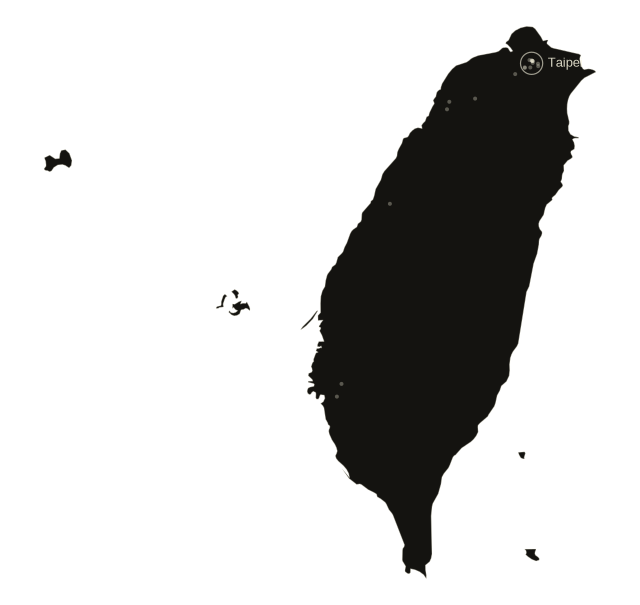
Map: Natural Earth
ITAD
ITAD in Taiwan: Collection, Data Wiping and Buyback
ITAD in Taiwan is the end-of-life handling of a company's IT hardware. Reboot Monkey collects retired equipment at the customer's site or data centre, wipes data or destroys storage media physically, and quotes resale or buyback of equipment that can be used again case by case.
8
of our services in Taiwan
Services in ITAD
- ITAD
- Colocation
- Data Center Decommissioning
- Data Center Migration
- Remote Hands
- Server Migration
- Smart Hands
- Rack and Stackon request
In depth
ITAD: 8 sections, open any to read more.
ITAD in Taiwan: How It Works
IT asset disposition (ITAD) is the end-of-life handling of a customer's IT hardware: collection and transport, data wiping or physical destruction of the storage media, and resale or buyback of the equipment that can be used again. In Taiwan, Reboot Monkey delivers these steps for companies retiring servers, network equipment and storage, whether the hardware sits at the company's own site or inside a data centre.
The work is processed by Reboot Monkey staff, either in a partner's processing facility or on the customer's site. The scope is data wiping, on-site shredding or degaussing, collection and transport, and resale or buyback quoted case by case. The customer chooses the combination a consignment needs, and the choice follows what is stored on the hardware and what should happen to it next.
ITAD is often the closing step of a larger project, and Reboot Monkey runs the neighbouring services as well. Data center decommissioning is the removal and disposal of retired hardware. Datacenter exit and relocation is the physical move of the customer's equipment to its new location together with the removal and disposal of the hardware that is retired. ITAD with buyback is IT asset disposition with the buyback of the retired hardware, quoted case by case. A customer that already knows its hardware will be retired within one of those projects can request the ITAD work together with it, and a customer that only needs the retired equipment collected and processed can request ITAD alone.
Before requesting a quote, a customer needs to settle where the hardware stands (a customer site or a data centre), what should happen to its storage media (wiping or physical destruction), and whether the equipment that can be used again should be offered for resale or buyback. Quotes depend on the customer and the size of the job.
E-waste Rules in Taiwan
In Taiwan, electronic waste falls under the Waste Disposal Act. For a retirement project, the distinction that matters in practice is between equipment that can be used again, which ITAD offers for resale or buyback, and equipment that cannot.
A consignment is easier to handle when it is defined before collection. Reboot Monkey records the customer's equipment in the data center by serial number, asset tag and rack position, against the customer's asset list, and a customer retiring hardware can ask for that recording first so that the consignment matches its own list item by item. The list also shows in advance which items carry storage media.
Retired hardware sorts by whether it carries storage media. Items that carry storage media, such as the drives in servers and storage arrays, need a data decision before anything else: wiping, or physical destruction. Items without storage media, such as network equipment and spare parts, move directly to the question of resale or buyback.
Collection takes place at the customer's site or data centre. Inside a data centre, the facility operator owns and runs the building, including its power, cooling and access policy, and Reboot Monkey engineers work under the operator's site rules. A collection from a data centre is therefore arranged within the operator's access arrangements, and the customer's request should name the building and the racks involved.
Retirement can be part of a move. In a datacenter exit, part of the equipment goes to its new location and the rest is retired. The move is the physical move of the customer's equipment, and ITAD applies only to the hardware that is retired. The decision of which items move and which are retired belongs to the customer, and Reboot Monkey acts on the list the customer provides.
Personal Data on Retired Drives in Taiwan
In Taiwan, personal data on retired drives falls under the Personal Data Protection Act (PDPA). A retired drive from a server or storage array can still hold personal data, so a retirement request has to say what happens to each drive, and the answer should be on record before the hardware leaves the customer's location.
ITAD offers data wiping and physical destruction of the storage media. Data wiping suits equipment that can be used again, which may then go to resale or buyback. Physical destruction ends the use of the media itself, and on the customer's site, storage media can be destroyed physically by shredding or degaussing.
The location of the work is a second decision. Processing happens either on the customer's site or in a partner's processing facility, and in both cases Reboot Monkey staff carry it out. A customer that wants its media destroyed at its own location requests the on-site route. A customer that prefers collection and processing elsewhere requests the collection route.
Reboot Monkey needs the choice per consignment, and per device group where the consignment is mixed, because it decides whether storage media stay with the equipment for resale or buyback or are separated for destruction. Drives from the systems that held personal data and drives from systems that did not can therefore be given different treatment in the same request.
Reboot Monkey does not interpret the Waste Disposal Act or the PDPA for a given consignment. A customer with a question on how either law applies to its hardware or its drives takes it to its own legal adviser, and Reboot Monkey carries out the wiping or destruction the customer instructs.
Instructions are easiest to follow when they are written per device class and attached to the request, for example wipe and offer for buyback for one group of servers, shred on site for another.
How Collection and Destruction Work
A request runs in a fixed order: quote, collection, processing, then resale or buyback of whatever can be used again.
Some situations change the starting point. When the hardware is still mounted in racks and has to be taken out, data center decommissioning, the removal and disposal of retired hardware, covers that removal. When the customer first needs to confirm which units are to go, a remote hands task can be ordered first: a physical task carried out on the customer's instruction, such as a visual check of the unit.
The division of work is plain. The customer supplies the list, the location and the instructions per device group. Reboot Monkey collects, transports and processes the hardware, and quotes the resale or buyback of equipment that can be used again.
On the collection route, the hardware leaves the customer's location before processing, and the request lists every item collected. On the on-site route, the storage media are shredded or degaussed at the customer's location, and the hardware that is not destroyed still goes through collection and transport. The route can differ between consignments in one request, so a customer can have drives shredded on site at one location while other hardware is collected whole.
- Request and quote: the customer sends the retirement list, the location of each item and the decision on storage media for each device group. The quote depends on the customer and the size of the job.
- Collection and transport: Reboot Monkey collects the retired hardware at the customer's site or data centre and transports it for processing.
- Processing: Reboot Monkey staff carry out data wiping, or physical destruction of the storage media, on the route the customer chose. Shredding or degaussing takes place on the customer's site.
- Resale or buyback: equipment that can be used again is offered for resale or buyback, and the terms are quoted case by case.
Why Reboot Monkey for ITAD in Taiwan
Reboot Monkey is a third-party datacenter services operator. It sells rack space, IP transit, leased IP addresses, network, data-centre hardware and the services that deliver, install and support them. It is not a hosting company and not a datacenter owner.
ITAD is therefore one service in a range that follows the hardware from supply and installation to retirement. A customer whose equipment was supplied or installed by Reboot Monkey can have the retirement handled by the same operator. The usual neighbours of ITAD in a project are these:
Spare parts are part of the same picture. Reboot Monkey keeps spares in the customer's rack on request, and when a customer replaces a platform, the spares tied to it can be placed on the retirement list with the rest of the hardware.
A customer deciding between ITAD alone and ITAD with buyback is choosing whether the retired hardware is bought back. The collection, transport and handling of the storage media are part of the service in both cases.
A second, briefed Reboot Monkey engineer is named as backup for every customer site. Backup cover is named per site, so a customer with several sites has a named backup at each.
- Hardware refresh: Reboot Monkey supplies servers, network equipment and spare parts, installs, mounts and cables the new hardware through rack and stack, and collects the retired equipment for ITAD.
- Move between facilities: server migration moves equipment between racks, rooms or facilities, and ITAD takes the equipment that is not moved.
- Closing a room or a site: data center decommissioning removes and disposes of retired hardware.
- Infrastructure run by Reboot Monkey: in IT infrastructure turnkey and run, Reboot Monkey buys, installs, configures and then runs the infrastructure the customer or its investors fund, and the retired hardware of that platform can follow the ITAD route.
How Reboot Monkey Handles IT Asset Disposition
These terms apply to IT asset disposition in Taiwan.
- Where the work is done: the processing is done by Reboot Monkey's own staff, in a partner's processing facility or on the customer's site, agreed case by case.
- Resale and buyback: reusable hardware can be resold through Reboot Monkey's procurement desk or bought back, quoted case by case.
Data sanitization and certificates
The data centres we work in hold their own certifications, such as ISO/IEC 27001 and ISO 9001. Ask us for the certificate of your site. Our ITAD partner's sites include facilities certified to ISO 9001, ISO 14001, ISO/IEC 27001 and ISO 45001. Ask us for the certificate of the site that handles your job.
- NIST SP 800-88 data sanitization
- Certificate of Destruction issued per storage device processed
IT Asset Disposition (ITAD) in Other Countries
A retirement programme that reaches beyond Taiwan is scoped country by country, because the rules for electronic waste and for personal data on retired drives are set by each country. A customer with hardware in several countries therefore asks for the service country by country, with one retirement list per country.
As of 2026, Reboot Monkey's field engineers work in 190 countries and more than 400 locations. For hardware in Switzerland, see IT Asset Disposition (ITAD) in Switzerland. For hardware in Thailand, see IT Asset Disposition (ITAD) in Thailand.
A programme that covers several countries is easier to run when the customer brings the same inputs for every location:
Within each country, the request is handled location by location. Each location has its own collection, and the route for storage media is chosen per location: wiping, or shredding or degaussing on the customer's site. Where a location also needs equipment moved, server migration moves equipment between racks, rooms or facilities, and datacenter exit and relocation adds the removal and disposal of the hardware that is retired.
The Waste Disposal Act and the Personal Data Protection Act (PDPA) are the Taiwan references for electronic waste and for personal data on retired drives. A customer with sites in several countries should expect the references to differ by country, and the instruction for each country's consignment should say which country it applies to.
- One retirement list per country, in the same format, so the consignments can be compared.
- A decision on storage media for each device group: wiping, or physical destruction.
- A contact at each customer site or data centre where collection takes place.
- The buyback question for the equipment that can be used again, quoted case by case.
Frequently Asked Questions
What does IT asset disposition cover in Taiwan?
IT asset disposition in Taiwan covers collection and transport of retired hardware from the customer's site or data centre, data wiping or physical destruction of the storage media, and resale or buyback of equipment that can be used again. Electronic waste falls under the Waste Disposal Act, and personal data on retired drives falls under the Personal Data Protection Act (PDPA). On the customer's site, storage media can be destroyed by shredding or degaussing.
Where does Reboot Monkey process retired hardware in Taiwan?
The processing is done by Reboot Monkey's own staff, in a partner's processing facility or on the customer's site, agreed case by case. The customer and Reboot Monkey settle which of the two applies before the job is scheduled, and the collection and transport of the hardware are arranged with the customer.
Can retired hardware be resold or bought back in Taiwan?
Yes. Reusable hardware can be resold through Reboot Monkey's procurement desk or bought back, quoted case by case. Send the list of the hardware, with models and quantities, through the contact form, and Reboot Monkey replies with what can be resold or bought back.
How do I get a quote for IT asset disposition in Taiwan?
Prices are quoted on request and depend on the customer and the size of the job. Send the site, the list of the hardware and whether storage media must be destroyed on site through the contact form, and Reboot Monkey replies with a quote for the job.
Request a quote for ITAD in Taiwan
Send the retirement list, the location of the hardware and the decision on storage media, and Reboot Monkey quotes the job.