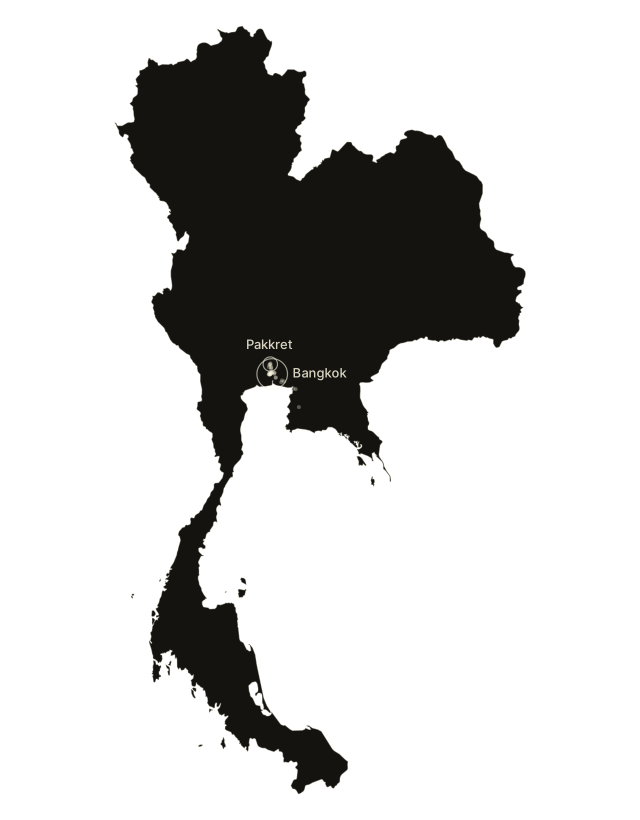
Map: Natural Earth
Data Center Decommissioning
Data Center Decommissioning in Thailand
Data center decommissioning in Thailand is the removal and disposal of retired hardware. Reboot Monkey engineers are dispatched to the customer's facility to remove servers, switches, storage arrays, and their cabling and rail kits, recording serial numbers, asset tags and rack positions against the customer's asset list.
9
of our services in Thailand
Choose your city
Services in Data Center Decommissioning
- Data Center Decommissioning
- Colocation
- Data Center Migration
- ITAD
- Rack and Stack
- Remote Hands
- Server Migration
- Smart Hands
In depth
Data Center Decommissioning: 8 sections, open any to read more.
Data Center Decommissioning in Thailand: How It Works
Data center decommissioning is the removal and disposal of retired hardware. For a company with equipment in a data center in Thailand, the job starts from the customer's own asset list and ends when every item on it has been accounted for. The scope is the customer's equipment and its cabling, and the customer decides what is retired. Reboot Monkey engineers are dispatched to the customer's facility to carry out the work. Reboot Monkey is a third-party datacenter services operator, not a hosting company and not a datacenter owner. The facility operator owns and runs the building, including its power, cooling and access policy, and Reboot Monkey engineers work under the operator's site rules.
A request is handled in a fixed order, so the customer knows what happens at the rack before the work starts.
The log kept during removal is the record of the job. Each item carries its serial number, asset tag and rack position, so the customer can reconcile what left the racks with the asset list it supplied at the start. Logging is per item, not per rack or per pallet. The out-of-hours and weekend windows are settled during scheduling, before the day of removal, and they form part of the plan agreed with the customer.
- Request: the customer names the data center in Thailand where the equipment stands and supplies the asset list for the hardware to be retired. The list is the reference for everything that follows.
- Recording: serial numbers, asset tags and rack positions are recorded against the customer's asset list, so each physical item is tied to a line the customer already recognises.
- Scheduling: removal is scheduled with the customer in advance, including any out-of-hours or weekend windows the facility requires.
- Removal: servers, switches, storage arrays, and their cabling and rail kits are taken out of the racks, and every item is logged as it is removed.
- Disposal: the retired hardware is disposed of or, when the customer asks for it, moved to resale or buyback, which are quoted case by case.
Datacenter Landscape in Thailand
Data centres in Thailand, ordered by the number of networks present:
- Telehouse – Bangkok (Telehouse - Global Data Centers), 66 Rimklong Bangkapi Road, Bangkapi, Huai Khwang, 10310 Bangkok: 69 networks
- TCC Technology Data Center- Bangkok,Thailand (TCC BNDC,TCC Bangna,TCCtech) (TCC Technology Co., Ltd), 1856 Interlink Tower II Bangna Trad Rd K.M. 4.5, 10260 Bangkok: 55 networks; carriers SG.GS
- Arise IDC - Bangkok North 1, Thailand (Arise IDC Company Limited, Thailand), 47/553-554, 557-558 Moo3, Bangkok Land Building, Popular 3 Road, Banmai, 11120 Pakkret: 39 networks
- CS LoxInfo Data Center - The Cloud (CS Loxinfo Public Company Limited), 181 Ratchada Ramintra Rd., Nuanchan,Buengkum, 10230 Bangkok: 39 networks
- NT Bangrak Tower (NATIONAL TELECOM PLC), 72, Charoenkrung Road, Si Phraya (Sub-district), Bang-rak (District), 10500 Bangkok: 34 networks
- JasTel Data Center (Thailand) (Jastel Network (Thailand)), 200 Moo 4 7th fl. Jasmine International Tower Chaengwattana road Pakkret, JasTel Data Center 200 หมู่ 4 7th fl. อาคารจัสมินอินเตอร์เนชั่นแนล ตำบล ปากเกร็ด อำเภอ ปากเกร็ด นนทบุรี 11120, Nonthaburi: 24 networks
- STTGDC BKK1, 1 Ramkamhaeng Road, Soi 28, Hua Mak , Bangkok 10240: 21 networks
- CS LoxInfo Data Center - CW Tower (CS Loxinfo Public Company Limited), Cyber World Tower A, 90 Ratchadapisek Rd., Huaykwang, Huaykwang, 10310 Bangkok: 20 networks
- Tellus Data Center (CS Loxinfo Public Company Limited), 91 Moo12, Phahonyothin Road, Khlong Nueng District, 12120 Pathum Thani: 17 networks
- NTT Bangkok 2 Data Center (BKK2) (NTT DATA's Global Data Centers division), 700/86 Soi Amata Nakorn Industrial, Ban Kao, Phan Thong District, 20000 Chon Buri: 12 networks
Data Center Decommissioning by City
City pages for data center decommissioning in Thailand:
- Bangkok: https://www.rebootmonkey.com/en/thailand/bangkok/data-center-decommissioning/
Data Center Decommissioning in Thailand: What We Deliver
The decommissioning service covers servers, switches, storage arrays, and their cabling and rail kits. These are the items a retired deployment leaves in a rack, and each one is treated as a line on the customer's asset list, identified by serial number, asset tag and rack position. Cabling and rail kits are part of the job, not an extra, because the removal is scoped to the whole deployment the customer is retiring.
Disposal is the second half of the service. Decommissioning means removing and disposing of retired hardware, and the customer can add IT asset disposition when the equipment needs more than removal. Two related services apply to retired hardware:
Asset inventory is also available as its own service: recording the customer's equipment in the data center by serial number, asset tag and rack position, against the customer's asset list. For a decommissioning job in Thailand, the same three identifiers are what each removed item is logged against.
Prices are quoted on request and depend on the customer and the size of the job. ITAD, resale and buyback are quoted case by case. To scope a request, the buyer states the data center in Thailand, lists the hardware to be removed and says whether disposal, resale or buyback is wanted. Because the asset list drives the log, it also gives the clearest picture of the size of the job.
- IT asset disposition (ITAD): data wiping, on-site shredding or degaussing, collection and transport, and resale or buyback quoted case by case, all processed by Reboot Monkey staff in a partner's processing facility or on the customer's site.
- ITAD with buyback: IT asset disposition with the buyback of the retired hardware, quoted case by case.
Why Reboot Monkey for Data Center Decommissioning in Thailand
Reboot Monkey sells rack space, IP transit, leased IP addresses, network, data-centre hardware and the services that deliver, install and support them, inside data centres that other companies own and run. It is vendor-neutral, and it is not a hosting company. For a decommissioning job that means the work is about the customer's hardware and the customer's instructions, not about moving the customer onto a platform.
When a deployment is retired and replaced, Reboot Monkey also delivers the replacement work. Rack and stack covers installing, mounting and cabling new hardware, and structured cabling covers installing, labelling and patching the cabling between the customer's racks and network equipment. Rack and network design covers the rack layout and the network topology of a new or expanding deployment, ending with documentation of the design and a controlled handover. Hardware supply and spares covers the supply of data-centre hardware, servers, network equipment and spare parts, with spares kept in the customer's rack on request.
Where the customer wants Reboot Monkey to take on the replacement infrastructure as well, IT infrastructure turnkey and run is available: the customer or its investors fund the IT infrastructure, and Reboot Monkey buys, installs, configures and then runs it inside the data center the customer chooses.
A second, briefed Reboot Monkey engineer is named as backup for every customer site, including the site where the decommissioning is carried out.
Three decisions sit with the customer before a removal is booked: which items on the asset list are retired, where the equipment goes afterwards (disposal, resale, buyback or a move to a new location), and which windows suit the customer's own teams within what the facility requires. Once those are settled, the scheduling, recording and logging steps run from the customer's list.
How Reboot Monkey Works
These terms apply in every facility in Thailand where Reboot Monkey engineers work.
- Response: 1-hour, around-the-clock incident response SLA, and a 15 minute premium response available where technicians are stationed on-site, as a paid add-on. The incident response SLA covers incidents and unplanned requests; on-site, dispatch and resolution times, priority tiers, and planned or scheduled work are agreed per site in the service agreement.
- Monitoring: 24/7 NOC monitoring across all facilities, covering IPMI, iDRAC, SNMP, temperature, power, network signals.
- Hardware: vendor-neutral technicians for Dell, HP, Cisco, Juniper and Arista equipment.
- Independence: independent from facility operators (not Equinix SmartHands, not NTT staff).
- One agreement: single provider across cities, so a customer in several cities needs only one agreement.
- Service levels and terms: https://www.rebootmonkey.com/en/solutions/sla
- Published case study: a major ICT provider engaged Reboot Monkey for three full infrastructure rollouts in Lahore, Karachi and Islamabad, with the hardware installed the same day at every site. Read the case study at https://www.rebootmonkey.com/en/resources/case-study/how-we-completed-3-full-deployments-across-pakistan
Data sanitization and certificates
The data centres we work in hold their own certifications, such as ISO/IEC 27001 and ISO 9001. Ask us for the certificate of your site.
- NIST SP 800-88 data sanitization
- Certificate of Destruction issued per storage device processed
Data Center Decommissioning in Other Countries
As of 2026, Reboot Monkey's field engineers work in 190 countries and more than 400 locations. A decommissioning job in Thailand can be one part of a larger programme, and three services cover the movement of equipment between sites:
In a move, the two halves of the job are carried out together: the physical move of the customer's equipment to its new location and the removal and disposal of the hardware that is retired. In a decommissioning job in Thailand that is followed by relocation, the asset list is the place to mark which items travel and which are retired. Server migration is the narrower service, because it moves equipment without retiring it.
A company that is also retiring hardware in Switzerland can start from Data Center Decommissioning in Switzerland.
When a programme spans several countries, each request should name the data center, list the hardware and state whether the equipment is being disposed of, sold back or moved to a new location, so that each site is scoped from its own asset list.
After a site is cleared or a move is complete, recurring physical work at the remaining sites can be agreed as remote hands retainers or hour blocks, with terms agreed per customer and quoted on request.
- Server migration: moving equipment between racks, rooms or facilities.
- Datacenter exit and relocation: the physical move of the customer's equipment to its new location together with the removal and disposal of the hardware that is retired.
- Multi-site rollouts: one installation programme carried out at several of the customer's sites by Reboot Monkey engineers.
Frequently Asked Questions
What does data center decommissioning cover in Thailand?
Data center decommissioning covers the removal and disposal of retired hardware: servers, switches, storage arrays, and their cabling and rail kits. Serial numbers, asset tags and rack positions are recorded against the customer's asset list, every item is logged as it is removed, and removal is scheduled with the customer in advance, including any out-of-hours or weekend windows the facility requires.
Do you work in every datacenter in Thailand?
Reboot Monkey engineers work in any facility in Thailand where the customer has equipment and access, under the operator's own access and safety rules. The customer adds the engineers to the facility's access list before the first visit.
How fast can Reboot Monkey respond in Thailand?
Incidents and unplanned requests are handled under a 1-hour, around-the-clock incident response SLA. There is also a 15 minute premium response available where technicians are stationed on-site, as a paid add-on. On-site, dispatch and resolution times, priority tiers, and planned or scheduled work are agreed per site in the service agreement.
How is Reboot Monkey different from the facility operator's own staff?
Facility operators' own technicians work for the building. Reboot Monkey engineers work for the customer: they are independent from facility operators (not Equinix SmartHands, not NTT staff), follow the customer's instructions, and the same team can cover several buildings in the country under one agreement.
How do I get started with data center decommissioning in Thailand?
Send the site, the equipment and the task through the contact form. Reboot Monkey replies with a quote and an engineer plan for that facility. Once agreed, the customer adds the engineers to the facility's access list and the data center decommissioning work is scheduled under the operator's rules.
Cities we cover in Thailand
Plan Your Decommissioning Job
Send the data center location and the list of hardware to be retired, and Reboot Monkey will scope the removal with you.