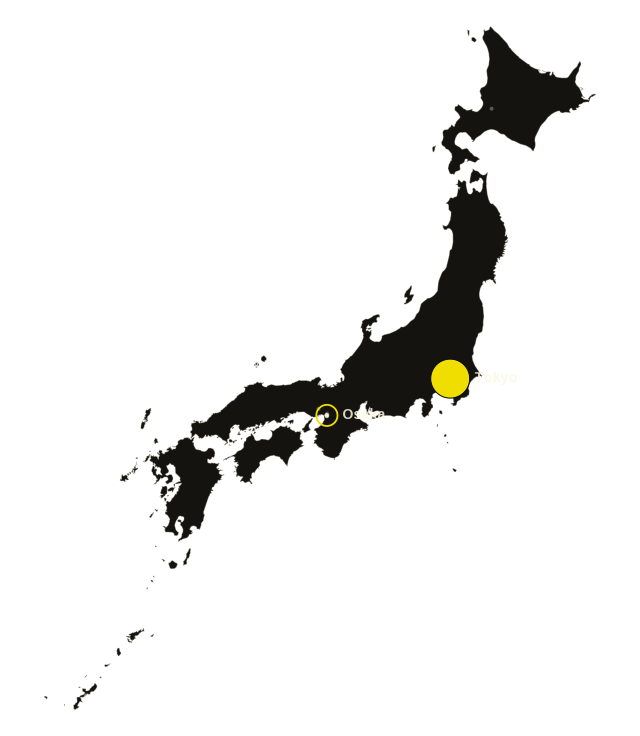
Map: Natural Earth
Asset Audits and Inventory
Hardware Inventory in Japan
Hardware inventory in Japan means Reboot Monkey engineers dispatched to the customer's data centre to record equipment by serial number, asset tag and rack position, against the customer's asset list. The customer names the data centre, supplies the list and receives the recorded entries set against it.
12
of our services in Japan
Services in Asset Audits and Inventory
In depth
Asset Audits and Inventory: 6 sections, open any to read more.
Hardware Inventory in Japan: How It Works
An asset audit and inventory in Japan starts from one practical question: does the equipment standing in the racks match the list the customer holds? Reboot Monkey answers it by dispatching engineers to the customer's data centre, where they record each item by serial number, asset tag and rack position, against the customer's asset list. The work is physical and is carried out at the rack, so the record reflects what is installed in the room and not only what a purchase record or a configuration database says should be there.
Each of the three recorded fields does a separate job. The serial number identifies the individual unit. The asset tag ties that unit to the customer's own register. The rack position states where the unit sits, which is the detail that remote hands, rack and stack, migration and decommissioning work all depend on. A mismatch in any one field, such as a tag that does not agree with the serial number on the list, is visible because all three are written down for the same item.
A hardware inventory request for Japan is raised like any other piece of physical datacenter work, and it moves through four steps.
- First, the request names the data centre in Japan that holds the equipment and supplies the asset list the record will be set against.
- Second, Reboot Monkey engineers are dispatched to the customer's data centre to carry out the work.
- Third, the engineers record the equipment at the rack: serial number, asset tag and rack position for each item.
- Fourth, the recorded entries are set against the customer's asset list, so that each listed item is matched to a rack position.
Datacenter Landscape in Japan
Data centres in Japan, ordered by the number of networks present:
- Equinix TY8 - Tokyo (Equinix, Inc.), 2-1-7 Higashi-shinagawa, 140-0002 Tokyo: 151 networks; carriers BB Backbone, Global Secure Layer, Macarne, Orange Wholesale International - EVPL, RISE.ph and others
- AT TOKYO (CC1/CC2) (AT TOKYO Corporation): 146 networks; carriers Arelion, BB Backbone, NTT ME, OneQode, RETN and others
- Equinix TY2 - Tokyo (Equinix, Inc.), 3-8-21 Higashi-Shinagawa, 140-0002 Tokyo: 118 networks; carriers Arelion, BB Backbone, Global Secure Layer, Macarne, Orange Wholesale International - EVPL and others
- Equinix OS1 - Osaka (Equinix, Inc.), 1-26-1 Shinmachi Nishi-ku, 550-0013 Osaka: 71 networks; carriers Arelion, BB Backbone, Hanshin Cable Engineering Co.,Ltd., JR West Optical Network(JRWON), Kintetsu Cable Network Co.,Ltd and others
- Equinix TY6 - Tokyo (Equinix, Inc.), 2-2-43 Higashi-shinagawa, 140-0002 Tokyo: 68 networks; carriers BB Backbone, Global Secure Layer and Orange Wholesale International - EVPL
- Equinix TY4 - Tokyo (Equinix, Inc.), Otemachi Finance City, 1-9-5 Otemachi, Chiyoda-ku, 100-0004 Tokyo: 63 networks; carriers BB Backbone, NTT ME, Rakuten Mobile and TOKAI Communications Corporation
- NTT DATA Dojima (building #4) (NTT DATA CORPORATION), NTT DATA Dojima Bldg, Dojima 3-1-21 kita-ku, Osaka: 50 networks; carriers BB Backbone, Digital Edge Osaka Cross Link Service, Hanshin Cable Engineering Co.,Ltd., JR West Optical Network(JRWON), Kintetsu Cable Network Co.,Ltd and others
- NTT DATA Otemachi Bldg (NTT DATA CORPORATION), NTT DATA Otemachi Bldg, Otemachi 2-2-2 Chiyoda-ku, Tokyo: 47 networks; carriers RETN and TOKAI Communications Corporation
- Telehouse – TOKYO Otemachi (KDDI Otemachi) (Telehouse - Global Data Centers), Otemachi Building, Otemachi, Chiyoda-ku, 100-0004 Tokyo: 45 networks
- Equinix TY7 - Tokyo (Equinix, Inc.), 2-2-43 Higashi-shinagawa, 140-0002 Tokyo: 39 networks; carriers Macarne and Orange Wholesale International - EVPL
Hardware Inventory in Japan: What We Deliver
The deliverable is the recorded inventory. Work that changes the equipment is requested as its own service. The services below are the physical services Reboot Monkey offers around a hardware inventory:
- Remote hands: physical tasks carried out on the customer's instruction (reboots, cable checks, component swaps, visual checks).
- Smart hands: technical work that needs diagnostic judgement and configuration knowledge.
- Rack and stack: installing, mounting and cabling new hardware.
- Server migration: moving equipment between racks, rooms or facilities.
- Data center decommissioning: removing and disposing of retired hardware.
- Structured cabling: installing, labelling and patching the cabling between the customer's racks and network equipment.
- Hardware supply and spares: supply of data-centre hardware, servers, network equipment and spare parts, with spares kept in the customer's rack on request.
Why Reboot Monkey for Hardware Inventory in Japan
Reboot Monkey is a third-party datacenter services operator. It sells rack space, IP transit, leased IP addresses, network, data-centre hardware and the services that deliver, install and support them, inside data centres that other companies own and run. It is not a hosting company and it does not own data centres. For an inventory, this means the record is made by an operator whose work is physical work inside other companies' data centres, and which also supplies the hardware, the connectivity and the rack space that the record describes.
As of 2026, Reboot Monkey's field engineers work in 190 countries and more than 400 locations. An inventory request is raised in the same way wherever the equipment stands: the customer names the data centre, supplies the asset list and receives the recorded entries.
A second, briefed Reboot Monkey engineer is named as backup for every customer site. For an inventory, the customer therefore knows two engineers by name for the site, including when the record is repeated later. The named backup is briefed, so the customer is not left without a contact for the site if the primary engineer is unavailable.
The record serves different readers in different ways. A procurement manager can set the equipment that was bought against the equipment that stands in the racks. An IT director planning a move can read rack positions and units from one record. A CTO who wants one reference for the equipment held in a data centre has the asset list, confirmed against the racks. An operations lead who hands work to remote hands or smart hands can quote the rack position in the instruction, so the engineer goes to the unit named.
An inventory is a physical record taken on a visit. Hardware monitoring is a separate service: monitoring of the customer's servers and network equipment by the Reboot Monkey NOC. The two answer different questions, one about what stands in the rack and the other about the equipment's operation, and a customer can request either.
Where equipment is added after an inventory, Reboot Monkey sells the network for the rack: it orders the cross connects and carrier circuits from the facility operator and the carriers present in the facility, and Reboot Monkey engineers install and patch the cabling in the customer's rack.
Equipment can also reach the rack through IT infrastructure turnkey and run. You or your investors fund the IT infrastructure. Reboot Monkey buys, installs, configures and then runs it for you, inside the data center you choose.
To request an inventory, contact Reboot Monkey with the data centre and the asset list.
How Reboot Monkey Works
These terms apply in every facility in Japan where Reboot Monkey engineers work.
- Scope: An asset audit records the customer's equipment in the data centre: serial numbers, asset tags and rack positions, against the customer's asset list.
- Response: 1-hour, around-the-clock incident response SLA, and a 15 minute premium response available where technicians are stationed on-site, as a paid add-on. The incident response SLA covers incidents and unplanned requests; on-site, dispatch and resolution times, priority tiers, and planned or scheduled work are agreed per site in the service agreement.
- Monitoring: 24/7 NOC monitoring across all facilities, covering IPMI, iDRAC, SNMP, temperature, power, network signals.
- Hardware: vendor-neutral technicians for Dell, HP, Cisco, Juniper and Arista equipment.
- Independence: independent from facility operators (not Equinix SmartHands, not NTT staff).
- One agreement: single provider across cities, so a customer in several cities needs only one agreement.
- Service levels and terms: https://www.rebootmonkey.com/en/solutions/sla
- Published case study: a major ICT provider engaged Reboot Monkey for three full infrastructure rollouts in Lahore, Karachi and Islamabad, with the hardware installed the same day at every site. Read the case study at https://www.rebootmonkey.com/en/resources/case-study/how-we-completed-3-full-deployments-across-pakistan
Asset Audits and Inventory
The data centres we work in hold their own certifications, such as ISO/IEC 27001 and ISO 9001. Ask us for the certificate of your site.
Frequently Asked Questions
What does asset audit and inventory cover in Japan?
Asset audit and inventory in Japan covers the customer's equipment in the data centre. Reboot Monkey engineers record serial numbers, asset tags and rack positions, against the customer's asset list. The request names the data centre and supplies the list, and the customer receives the recorded entries set against it. Work that changes the equipment is ordered as a separate service.
Do you work in every datacenter in Japan?
Reboot Monkey engineers work in any facility in Japan where the customer has equipment and access, under the operator's own access and safety rules. The customer adds the engineers to the facility's access list before the first visit.
How fast can Reboot Monkey respond in Japan?
Incidents and unplanned requests are handled under a 1-hour, around-the-clock incident response SLA. There is also a 15 minute premium response available where technicians are stationed on-site, as a paid add-on. On-site, dispatch and resolution times, priority tiers, and planned or scheduled work are agreed per site in the service agreement.
How is Reboot Monkey different from the facility operator's own staff?
Facility operators' own technicians work for the building. Reboot Monkey engineers work for the customer: they are independent from facility operators (not Equinix SmartHands, not NTT staff), follow the customer's instructions, and the same team can cover several buildings in the country under one agreement.
How do I get started with asset audits and inventory in Japan?
Send the site, the equipment and the task through the contact form. Reboot Monkey replies with a quote and an engineer plan for that facility. Once agreed, the customer adds the engineers to the facility's access list and the asset audits and inventory work is scheduled under the operator's rules.
Request a hardware inventory in Japan
Send Reboot Monkey the data centre and your asset list to receive a quote for the job.