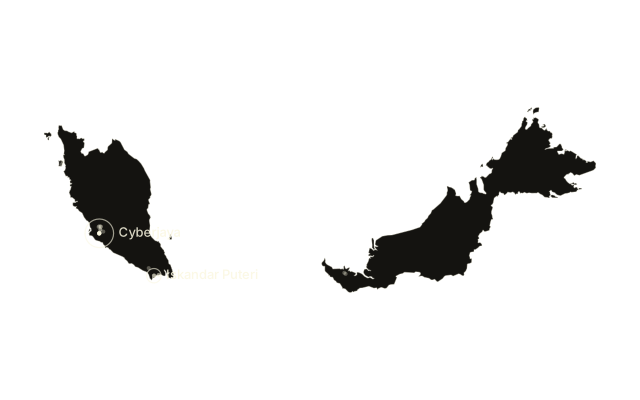
Map: Natural Earth
ITAD
ITAD in Malaysia
ITAD in Malaysia is the end-of-life handling of a company's IT hardware: collection and transport, data wiping or physical destruction of the storage media, and resale or buyback of equipment that can be used again. Reboot Monkey collects retired hardware at the customer's site or data centre and transports it for processing.
9
of our services in Malaysia
In depth
ITAD: 7 sections, open any to read more.
ITAD in Malaysia: How It Works
IT asset disposition (ITAD) is the end-of-life handling of a customer's IT hardware: collection and transport, data wiping or physical destruction of the storage media, and resale or buyback of the equipment that can be used again. Reboot Monkey delivers ITAD in Malaysia for companies that are retiring servers, storage and network equipment from a data centre or an office server room.
Retirement has different triggers, such as a hardware refresh, a consolidation of equipment or the closure of a room or site, but the decisions a buyer has to settle are the same each time. Which items hold data, which can be sold again, where the work is carried out and which rules in Malaysia apply to the material. Retirement also often follows other work on the same equipment, for example when servers are moved between racks, rooms or facilities and the old units are left behind. Answering these questions before the job is requested keeps the scope clear, and it is what lets Reboot Monkey plan the collection and quote any resale or buyback.
Equipment that can be used again keeps some value, and resale or buyback is the part of ITAD that addresses it. Because that value depends on what the equipment is, resale or buyback is quoted case by case.
A request for ITAD in Malaysia is built from four parts:
- Data wiping of storage media that is to be reused or sold
- Physical destruction of storage media on the customer's site
- Collection of the retired hardware and its transport for processing
- Resale or buyback of the equipment that can be used again
E-waste Rules in Malaysia
In Malaysia, electronic waste falls under the Environmental Quality (Scheduled Wastes) Regulations 2005. For a buyer, this means retired hardware is not only an asset question but also a waste question, and the two need to be separated before any work starts. Equipment that can be used again belongs in resale or buyback. Equipment that cannot be used again has to be disposed of. The regulations are a matter for the customer's own legal and environmental advisers. What Reboot Monkey needs from the customer is a clear list for the job: which items are to be sold or bought back, which are to be destroyed or disposed of, and where they are located. A list drawn up this way lets the collection be planned against the site, and it lets resale or buyback be quoted case by case, because the value of reusable equipment depends on what the equipment is. Mixed loads need the most care at the listing stage. A single room being cleared can hold servers with working drives, network switches, cabling and failed components, and each category leads to a different outcome. A server that is still in working order is a candidate for resale or buyback. A storage array may be both: the chassis can be reusable while the drives inside it are to be destroyed. Data wiping is the route for storage media that is to remain usable, so it belongs with the equipment going to resale or buyback. Physical destruction ends the use of the media, so it belongs with the items that are not to be reused. Deciding this item by item, in writing, before the collection date avoids having to make the choice at the rack. It also helps to hold an inventory of the hardware before the collection date. When the list given to Reboot Monkey and the list of what is actually collected can be compared line by line, any difference shows up at once instead of months later, and the customer's own records stay consistent with the waste route each item took. Where a customer wants only part of the hardware to go to resale or buyback, the list should say so item by item. Everything not marked for resale or buyback is then treated as an item for destruction or disposal, and the regulations above are the frame the customer's advisers will apply to those items.
Personal Data on Retired Drives in Malaysia
In Malaysia, personal data on retired drives falls under the Personal Data Protection Act 2010 (PDPA), overseen by the Personal Data Protection Commissioner. A retired drive is not empty because it has left service. Whatever the server stored, which may include customer, staff or supplier records, remains on the media until the data is wiped or the media is destroyed.
Reboot Monkey handles the physical side of this in two ways. The first is data wiping, which is used when the storage media is to be reused or sold with the equipment. The second is physical destruction: on the customer's site, storage media can be destroyed physically by shredding or degaussing. The two routes lead to different results, since a wiped drive can go on to be used again and a destroyed drive cannot, so the choice is made per item and written into the job description.
The decision between the routes rests with the customer. It usually turns on three questions. Is the drive part of equipment that will be sold or bought back? Did the system it came from store personal data? And does the customer want the media destroyed at its own location rather than carried away intact? A drive from a system that held customer records and that is not part of a resale or buyback is a natural candidate for on-site shredding or degaussing. A drive in a server that is going to resale or buyback is a candidate for data wiping.
Where a customer cannot say what a drive held, the cautious course is to treat it as if it held personal data and to choose the route accordingly. An older server taken out of a room that has been unused for years is the typical case: nobody on the current team may know what it stored, and the media is the part of it that carries the risk.
What the PDPA requires of a company is a question for that company's own legal advisers, and the Commissioner oversees the Act. Reboot Monkey's part is the physical handling of the media: wiping it or destroying it as instructed, and collecting and transporting the hardware. The customer remains the party that decides which drives held personal data and which method applies to each.
How Collection and Destruction Work
A request starts with the customer describing the job: the site or data centre where the hardware stands, the kinds of equipment to be retired, which storage media is present and what is to be done with each item (wiping, destruction, resale or buyback). Reboot Monkey uses that description to plan the work and to quote any resale or buyback case by case.
Collection comes next. Reboot Monkey collects the retired hardware at the customer's site or data centre and transports it for processing. Reboot Monkey engineers are dispatched to the location to carry out the collection, and a second, briefed Reboot Monkey engineer is named as backup for every customer site.
Where the location is a data centre, the facility operator owns and runs the building, including its power, cooling and access policy, and Reboot Monkey engineers work under the operator's site rules.
Processing follows collection. It is carried out by Reboot Monkey staff, either on the customer's site or in a processing facility after transport. Which of the two applies follows from the scope of the job. Items whose storage media is to be shredded or degaussed need that work done on site, as the data protection facts above describe, while hardware headed for wiping and resale or buyback is processed after it has been transported.
Some preparation on the customer's side makes the collection run more smoothly. It helps to name a contact at the location who can show the engineers the equipment, to have the item list in hand, and, for a data centre, to have arranged access with the operator in advance. These are practical points rather than conditions, but they are the details that most often decide whether a collection happens on the planned day.
Once processing is finished, equipment that can be used again moves on to resale or buyback, and the outcome of that is quoted case by case rather than from a fixed schedule. Changes of scope are easiest to make at the request stage, before the collection is planned, because the collection route and the processing location both depend on what is on the list.
Why Reboot Monkey for ITAD in Malaysia
Reboot Monkey is a third-party datacenter services operator. It sells rack space, IP transit, leased IP addresses, network, data-centre hardware and the services that deliver, install and support them, inside data centres that other companies own and run. It is not a hosting company and it does not own datacenters. The hardware being retired belongs to the customer, and the building it stands in may belong to a facility operator, which is the setting Reboot Monkey works in.
As of 2026, Reboot Monkey's field engineers work in 190 countries and more than 400 locations.
Retiring hardware is often one step in a wider piece of work. Moving equipment between racks, rooms or facilities is server migration, and removing and disposing of retired hardware is data center decommissioning. A customer who is clearing out a room, or moving a deployment and leaving the old equipment behind, can describe the whole job to Reboot Monkey and say which part is ITAD, so the retirement of the hardware is planned together with the work around it.
Every customer site has a named backup engineer who has been briefed on the site, so the collection does not depend on a single person being available. The engineers who handle the work are Reboot Monkey engineers, and the processing is done by Reboot Monkey staff, on the customer's site or in a processing facility.
Prices are quoted on request and depend on the customer and the size of the job. The most useful things to include in the first message are the location of the hardware, the kinds of equipment, whether the drives are to be wiped or destroyed, and whether any of the equipment is a candidate for resale or buyback. With those four points, the quote can address the actual job instead of an assumed one.
For procurement managers, this gives a single scope to approve: collection, handling of the storage media and any resale or buyback described in one request. For CTOs and IT directors, it keeps the decision on data in their hands, since the route for each drive is set by the customer in the job description.
How Reboot Monkey Handles IT Asset Disposition
These terms apply to IT asset disposition in Malaysia.
- Where the work is done: the processing is done by Reboot Monkey's own staff, in a partner's processing facility or on the customer's site, agreed case by case.
- Resale and buyback: reusable hardware can be resold through Reboot Monkey's procurement desk or bought back, quoted case by case.
Data sanitization and certificates
The data centres we work in hold their own certifications, such as ISO/IEC 27001 and ISO 9001. Ask us for the certificate of your site. Our ITAD partner's sites include facilities certified to ISO 9001, ISO 14001, ISO/IEC 27001 and ISO 45001. Ask us for the certificate of the site that handles your job.
- NIST SP 800-88 data sanitization
- Certificate of Destruction issued per storage device processed
Frequently Asked Questions
What does IT asset disposition cover in Malaysia?
Reboot Monkey collects retired hardware at the customer's site or data centre and transports it for processing. Storage media is either wiped or physically destroyed, and equipment that can be used again goes to resale or buyback, quoted case by case. In Malaysia, electronic waste falls under the Environmental Quality (Scheduled Wastes) Regulations 2005, and personal data on retired drives falls under the Personal Data Protection Act 2010.
Where does Reboot Monkey process retired hardware in Malaysia?
The processing is done by Reboot Monkey's own staff, in a partner's processing facility or on the customer's site, agreed case by case. The customer and Reboot Monkey settle which of the two applies before the job is scheduled, and the collection and transport of the hardware are arranged with the customer.
Can retired hardware be resold or bought back in Malaysia?
Yes. Reusable hardware can be resold through Reboot Monkey's procurement desk or bought back, quoted case by case. Send the list of the hardware, with models and quantities, through the contact form, and Reboot Monkey replies with what can be resold or bought back.
How do I get a quote for IT asset disposition in Malaysia?
Prices are quoted on request and depend on the customer and the size of the job. Send the site, the list of the hardware and whether storage media must be destroyed on site through the contact form, and Reboot Monkey replies with a quote for the job.
Retire your hardware in Malaysia
Describe the site, the equipment and what should happen to each item, and Reboot Monkey will quote the collection, the handling of storage media and any resale or buyback.