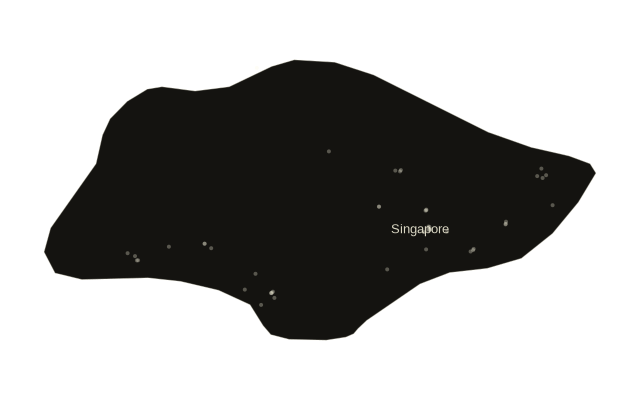
Map: Natural Earth
Ip Transit
Internet Transit in Singapore
Internet transit connects your network to the rest of the internet through an upstream provider. Reboot Monkey sells it as IP transit in Economy, Premium and DDoS Premium plans, quoted per data center, together with rack space, leased IP addresses and on-site engineers under one agreement.
15
of our services in Singapore
In depth
Ip Transit: 7 sections, open any to read more.
Internet Transit in Singapore: How It Works
Internet transit gives a network a route to every other network on the internet through an upstream provider. The customer's routers exchange routes with that provider over BGP. The provider carries the customer's traffic to its destinations and brings return traffic back to the customer's address space. A business that runs servers, a platform or a network edge in Singapore buys transit when it needs reachability that does not depend on a direct relationship with each network it talks to.
Reboot Monkey sells IP transit as a third-party datacenter services operator. It is not a hosting company and it does not own datacenters. The transit is delivered to equipment that sits inside a data center owned and run by another company. That shapes how a request is handled, and the steps below follow the order in which the work happens.
The first step is to name the data center and the capacity needed. Transit is quoted per data center for the capacity the customer needs, so the quote follows the building and the bandwidth, not a fixed catalogue entry. A customer who has not yet chosen a building can raise the question at first contact, and the quote is prepared for the data center that is chosen.
The second step is the choice of plan. Once the quote for the chosen data center is in hand, the customer decides which plan fits the traffic it expects to carry and the exposure it has to attack traffic.
The third step is the physical connection. Reboot Monkey sells the network for the rack: it orders the cross connects and carrier circuits from the facility operator and the carriers present in the facility. Reboot Monkey engineers then install and patch the cabling in the customer's rack, so the transit service ends at the customer's own equipment.
The fourth step covers everything around the circuit. If the customer also needs rack space, leased IP addresses or hands-on installation of new hardware, those items are added to the same request and come under the same agreement, so the buyer deals with one provider from the first quote to the finished installation.
Datacenter Landscape in Singapore
Data centres in Singapore, ordered by the number of networks present:
- Equinix SG1 - Singapore (Equinix, Inc.), 20 Ayer Rajah Crescent, #05-05/08, Singapore 139964: 534 networks; carriers Arelion, Axclusive, Core-Backbone, EDGOO NETWORKS, Falcore Australia Pty Ltd and others
- Equinix SG3 - Singapore (Equinix, Inc.), 26A Ayer Rajah Crescent, Singapore 139963: 192 networks; carriers Core-Backbone, EDGOO NETWORKS, Falcore Australia Pty Ltd, Global Secure Layer, Macarne and others
- Global Switch Singapore, 2 Tai Seng Avenue, Singapore 534408: 141 networks; carriers Arelion, Axclusive, Global Secure Layer, OneQode, RETN and others
- Equinix SG2 - Singapore (Equinix, Inc.), 15 Pioneer Walk, Singapore 627753: 69 networks; carriers LASOTEL, Orange Wholesale International - EVPL and SG.GS
- Digital Realty Singapore SIN10, 29A International Business Park, Jurong East, Singapore 609934: 25 networks; carriers Netrouting and SG.GS
- Racks Central (NewMedia Express Pte Ltd), 23 Tai Seng Drive, Singapore 535224: 24 networks; carriers SG.GS
- Epsilon Global Hubs Singapore, New Tech Park, 151 Lorong Chuan, Singapore 556741: 22 networks; carriers RETN and SG.GS
- Equinix SG5 - Singapore (Equinix, Inc.), 6 Sunview Drive, Singapore 627485: 20 networks; carriers SG.GS
- BDx SIN1 - Singapore (BDx DC Services Limited), 110 Paya Lebar Road, Singapore 409009: 11 networks; carriers SG.GS
- Equinix SG4 - Singapore (Equinix, Inc.), 7 Tai Seng Drive, Singapore 535218: 11 networks; carriers Orange Wholesale International - EVPL and SG.GS
Internet Transit in Singapore: What We Deliver
IP transit rarely arrives alone. A transit port is only useful once the address space, the cabling and the equipment behind it are in place, and Reboot Monkey delivers each of these pieces so the buyer does not have to coordinate several suppliers. The items below are those most often combined with a transit order.
- IP transit: offered as Economy, Premium and DDoS Premium plans, each quoted per data center for the capacity the customer needs.
- IPv4 leasing: leasing IPv4 addresses, alone or together with IP transit and rack space under one agreement.
- Cross-connects and carrier circuits: ordered from the facility operator and the carriers present in the facility, with Reboot Monkey engineers installing and patching the cabling in the customer's rack.
- Rack and stack: installing, mounting and cabling new hardware.
- Structured cabling: installing, labelling and patching the cabling between the customer's racks and network equipment.
- Rack and network design: the rack layout and the network topology of a new or expanding deployment, ending with documentation of the design and a controlled handover.
- Hardware supply and spares: supply of data-centre hardware, servers, network equipment and spare parts, with spares kept in the customer's rack on request.
IP Transit vs Peering in Singapore
Transit and peering solve different problems, and most networks of any size end up using both. With transit, the customer pays an upstream provider to carry its traffic to the whole internet. The provider is responsible for the onward routes, so one transit connection gives reachability to destinations the customer has no direct relationship with.
With peering, two networks connect to each other and exchange traffic that belongs to their own customers and address space. Peering does not give access to the rest of the internet. It is an arrangement between two parties, and it covers only the routes each side chooses to announce to the other.
The practical difference for a buyer is what each one covers and who carries the traffic. Transit is a purchased service from a provider that answers for the path to the destination. Peering is an exchange with a specific network and reaches only that network and its customers. A network that relies on peering alone has gaps in its reachability, which is why transit usually stays in place as the route to everything else.
A buyer comparing the two should start from the destinations that carry its traffic. Traffic that goes mostly to a small number of large networks may justify a direct link to them. Traffic that is spread across many destinations needs transit, because no network can reach all of them by direct arrangement.
Reboot Monkey's role sits on the transit side and on the physical side of both. It sells IP transit quoted per data center for the capacity the customer needs. A direct link between two networks in the same building is a cross connect, and Reboot Monkey orders cross connects and carrier circuits from the facility operator and the carriers present in the facility. Its engineers install and patch the cabling in the customer's rack.
A customer that wants both can place one request: the transit capacity at the chosen data center, the cross connect for a direct link, the patching in the rack and, where needed, rack space or leased IP addresses. Because these come from one provider under one agreement, the transit order and the direct link are scheduled and cabled as one piece of work rather than as separate projects.
Why Reboot Monkey for Internet Transit in Singapore
The reason to buy transit from Reboot Monkey is the way the surrounding work is organised. IP transit, rack space, leased IP addresses and on-site engineers come from one provider, under one agreement. A procurement manager has one contract to review and one party to hold to the delivery, and a CTO has one point of contact when the circuit, the address space and the cabling in the rack have to line up.
Reboot Monkey does not own the data center. The facility operator owns and runs the building, including its power, cooling and access policy, and Reboot Monkey engineers work under the operator's site rules. Reboot Monkey stays on the services side: the network that reaches the rack, the hardware that sits in it and the hands that install and support it.
Continuity is handled by name. A second, briefed Reboot Monkey engineer is named as backup for every customer site, so a transit installation or a later change does not depend on one person being available.
Once the transit is running, the same provider can carry on the work around it:
- Remote hands for physical tasks on the customer's instruction, such as reboots, cable checks, component swaps and visual checks.
- Smart hands for technical work that needs diagnostic judgement and configuration knowledge.
- Remote hands retainers and hour blocks, agreed as a retainer or as a block of hours for recurring work, with terms agreed per customer and quoted on request.
- Multi-site rollouts: one installation programme carried out at several of the customer's sites by Reboot Monkey engineers, under one agreement.
- Datacenter exit and relocation: the physical move of the customer's equipment to its new location together with the removal and disposal of the hardware that is retired.
How Reboot Monkey Works
These terms apply in every facility in Singapore where Reboot Monkey engineers work.
- Scope: IP transit is offered as Economy, Premium and DDoS Premium plans, each quoted per data center for the capacity the customer needs.
- Scope: IP transit, rack space, leased IP addresses and on-site engineers come from one provider, under one agreement.
- Response: 1-hour, around-the-clock incident response SLA, and a 15 minute premium response available where technicians are stationed on-site, as a paid add-on. The incident response SLA covers incidents and unplanned requests; on-site, dispatch and resolution times, priority tiers, and planned or scheduled work are agreed per site in the service agreement.
- Monitoring: 24/7 NOC monitoring across all facilities, covering IPMI, iDRAC, SNMP, temperature, power, network signals.
- Hardware: vendor-neutral technicians for Dell, HP, Cisco, Juniper and Arista equipment.
- Independence: independent from facility operators (not Equinix SmartHands, not NTT staff).
- One agreement: single provider across cities, so a customer in several cities needs only one agreement.
- Service levels and terms: https://www.rebootmonkey.com/en/solutions/sla
- Published case study: a major ICT provider engaged Reboot Monkey for three full infrastructure rollouts in Lahore, Karachi and Islamabad, with the hardware installed the same day at every site. Read the case study at https://www.rebootmonkey.com/en/resources/case-study/how-we-completed-3-full-deployments-across-pakistan
Ip Transit
The data centres we work in hold their own certifications, such as ISO/IEC 27001 and ISO 9001. Ask us for the certificate of your site.
Frequently Asked Questions
What is the difference between IP transit and IP peering?
IP transit is a paid service in which an upstream provider carries your traffic to the whole internet. IP peering is a direct exchange between two networks, limited to the customers and routes each side announces to the other. Transit gives reachability to everything, while peering reaches only the peer network and its customers, so many networks use both.
What does ip transit cover in Singapore?
IP transit is offered as Economy, Premium and DDoS Premium plans, each quoted per data center for the capacity the customer needs. It can be combined with rack space, leased IP addresses and on-site engineers under one agreement. Reboot Monkey orders the cross connects and carrier circuits, and its engineers install and patch the cabling in the customer's rack.
Do you work in every datacenter in Singapore?
Reboot Monkey engineers work in any facility in Singapore where the customer has equipment and access, under the operator's own access and safety rules. The customer adds the engineers to the facility's access list before the first visit.
How fast can Reboot Monkey respond in Singapore?
Incidents and unplanned requests are handled under a 1-hour, around-the-clock incident response SLA. There is also a 15 minute premium response available where technicians are stationed on-site, as a paid add-on. On-site, dispatch and resolution times, priority tiers, and planned or scheduled work are agreed per site in the service agreement.
How is Reboot Monkey different from the facility operator's own staff?
Facility operators' own technicians work for the building. Reboot Monkey engineers work for the customer: they are independent from facility operators (not Equinix SmartHands, not NTT staff), follow the customer's instructions, and the same team can cover several buildings in the country under one agreement.
How do I get started with ip transit in Singapore?
Send the site, the equipment and the task through the contact form. Reboot Monkey replies with a quote and an engineer plan for that facility. Once agreed, the customer adds the engineers to the facility's access list and the ip transit work is scheduled under the operator's rules.
Request IP transit for your Singapore data center
Tell Reboot Monkey the data center and the capacity you need, and receive a quote for the Economy, Premium or DDoS Premium plan.