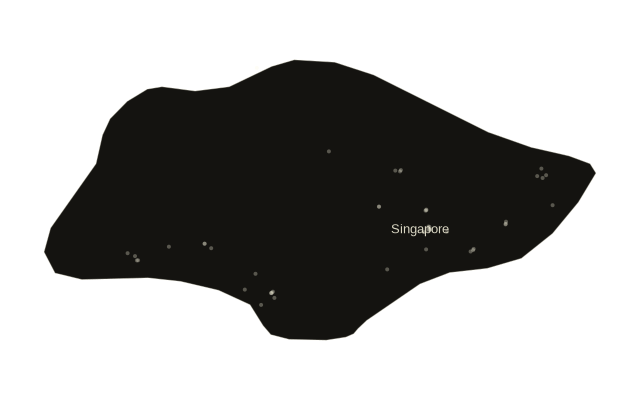
Map: Natural Earth
Rack and Network Design
Data Center Network Design in Singapore
Data center network design in Singapore means planning the rack layout and the network topology of a new or expanding deployment. Reboot Monkey ends the work with documentation of the design and a controlled handover, and its engineers can also build the design as drawn.
15
of our services in Singapore
Services in Rack and Network Design
In depth
Rack and Network Design: 6 sections, open any to read more.
Data Center Network Design in Singapore: How It Works
Rack and network design covers the rack layout and the network topology of a new or expanding deployment, and ends with documentation of the design and a controlled handover. In Singapore the work is done inside a data center that another company owns and runs, so a design starts from the rack space and the connectivity the customer has in that building.
A request begins with the customer's brief. The brief states what is being deployed, whether a first installation or an expansion of racks that already hold equipment, which data center the equipment goes into, what the hardware is, and which networks the racks must reach, such as IP transit, leased IP addresses or carrier circuits. Reboot Monkey turns that brief into a scope. The scope decides how much design work is needed and whether Reboot Monkey engineers also carry the design out.
The design work then runs in a fixed order.
Topology is the decision with the longest consequences, because it is the part that is hardest to change once hardware is racked. Two common shapes are the three-tier model, with access, aggregation and core layers, and the leaf-spine model, in which every leaf switch connects to every spine switch. Which one fits depends on how much traffic moves between servers compared with traffic leaving the building, and on how far the deployment is expected to grow. The design documentation states the topology that was chosen.
Rack layout follows the same logic at the scale of a single rack. The placement of switches, the routing of patch cabling and the labelling of ports are fixed before hardware arrives, so that the engineers who later install, patch or swap equipment can work from the layout instead of tracing cables. A layout that keeps rack space unused for growth also lets a later expansion reuse the existing topology rather than reopen it.
Work in the building follows the site rules. The facility operator owns and runs the building, including its power, cooling and access policy, and Reboot Monkey engineers work under the operator's site rules. Anything in a design that touches the building itself is therefore arranged with the operator.
When the customer wants the design built, Reboot Monkey engineers can carry it out: they arrange the racks, install the hardware and configure the network as designed. When the customer prefers to build with its own team, the documentation and the handover are the end of the design work.
- Rack layout: where servers, switches and patch panels sit in each rack, how cables run between them, and how much space is left unused for the next expansion.
- Network topology: how servers connect to switches, how the switches connect to each other, and where the uplinks to IP transit and carrier circuits attach.
- Documentation: the layout and the topology are written down so that the design can be read, checked and built by someone who was not part of the design work.
- Controlled handover: the documented design is handed to the customer in a defined step, so the customer's team knows what was specified and where each item belongs.
Datacenter Landscape in Singapore
Data centres in Singapore, ordered by the number of networks present:
- Equinix SG1 - Singapore (Equinix, Inc.), 20 Ayer Rajah Crescent, #05-05/08, Singapore 139964: 534 networks; carriers Arelion, Axclusive, Core-Backbone, EDGOO NETWORKS, Falcore Australia Pty Ltd and others
- Equinix SG3 - Singapore (Equinix, Inc.), 26A Ayer Rajah Crescent, Singapore 139963: 192 networks; carriers Core-Backbone, EDGOO NETWORKS, Falcore Australia Pty Ltd, Global Secure Layer, Macarne and others
- Global Switch Singapore, 2 Tai Seng Avenue, Singapore 534408: 141 networks; carriers Arelion, Axclusive, Global Secure Layer, OneQode, RETN and others
- Equinix SG2 - Singapore (Equinix, Inc.), 15 Pioneer Walk, Singapore 627753: 69 networks; carriers LASOTEL, Orange Wholesale International - EVPL and SG.GS
- Digital Realty Singapore SIN10, 29A International Business Park, Jurong East, Singapore 609934: 25 networks; carriers Netrouting and SG.GS
- Racks Central (NewMedia Express Pte Ltd), 23 Tai Seng Drive, Singapore 535224: 24 networks; carriers SG.GS
- Epsilon Global Hubs Singapore, New Tech Park, 151 Lorong Chuan, Singapore 556741: 22 networks; carriers RETN and SG.GS
- Equinix SG5 - Singapore (Equinix, Inc.), 6 Sunview Drive, Singapore 627485: 20 networks; carriers SG.GS
- BDx SIN1 - Singapore (BDx DC Services Limited), 110 Paya Lebar Road, Singapore 409009: 11 networks; carriers SG.GS
- Equinix SG4 - Singapore (Equinix, Inc.), 7 Tai Seng Drive, Singapore 535218: 11 networks; carriers Orange Wholesale International - EVPL and SG.GS
Data Center Network Design in Singapore: What We Deliver
The deliverable of a design job is a documented rack layout and network topology, handed over in a controlled way. Where the customer asks for it, the deliverable extends to the build: arranging the racks, installing the hardware and configuring the network as designed. A design also draws on several neighbouring services, each of which keeps its own definition.
Connectivity is part of what a topology has to show. Reboot Monkey sells the network for the rack: it orders the cross connects and carrier circuits from the facility operator and the carriers present in the facility, and Reboot Monkey engineers install and patch the cabling in the customer's rack. For the uplinks of a design, IP transit is offered as Economy, Premium and DDoS Premium plans, each quoted per data center for the capacity the customer needs. IPv4 leasing covers the addresses, alone or together with IP transit and rack space.
The services that most often sit next to a design job are these.
For a first deployment, the design moves into rack and stack and structured cabling, with the cross connects and carrier circuits ordered from the operator and the carriers. For an expansion, the layout of the new racks depends on the equipment already in the data center, so an inventory of the existing equipment can come first. For a design that is repeated across locations, a multi-site rollout runs the same installation programme at each of the customer's sites.
After the handover, the documented design is the reference for later work on the racks. That work includes remote hands tasks (reboots, cable checks, component swaps, visual checks) and smart hands work that needs diagnostic judgement and configuration knowledge. For recurring work, remote hands can be agreed as a retainer or as a block of hours, with terms agreed per customer and quoted on request.
Where the customer prefers not to run the build itself, IT infrastructure turnkey and run is available. You or your investors fund the IT infrastructure. Reboot Monkey buys, installs, configures and then runs it for you, inside the data center you choose. The data center itself stays with its operator.
- Rack and stack: installing, mounting and cabling new hardware, which is the step that follows a rack layout.
- Structured cabling: installing, labelling and patching the cabling between the customer's racks and network equipment.
- Hardware supply and spares: supply of data-centre hardware, servers, network equipment and spare parts, with spares kept in the customer's rack on request.
- Hardware monitoring: monitoring of the customer's servers and network equipment by the Reboot Monkey NOC.
- Asset inventory: recording the customer's equipment in the data center by serial number, asset tag and rack position, against the customer's asset list.
- Multi-site rollouts: one installation programme carried out at several of the customer's sites by Reboot Monkey engineers.
- GPU and AI cluster deployment: racking, cabling and node swaps.
Why Reboot Monkey for Data Center Network Design in Singapore
Reboot Monkey is a third-party datacenter services operator. It sells rack space, IP transit, leased IP addresses, network, data-centre hardware and the services that deliver, install and support them, inside data centres that other companies own and run. It is not a hosting company and does not own data centers. For a design job this means the design, the hardware, the connectivity and the physical work can all be bought from one supplier that works inside the building the customer has chosen.
Design and build stay connected. Reboot Monkey engineers can arrange the racks, install the hardware and configure the network as designed, so the engineers on site work from the same documented design that was handed over. The customer is not required to have the design built by Reboot Monkey. The documentation and the handover stand as a deliverable of their own.
For a procurement manager or an IT director, the useful property of a design job is that its output is a document. The network team can review the documentation before any hardware is racked, and the controlled handover marks the end of the design work. When the build is included, the installed racks and the configured network are checked against that same documentation.
Continuity at the customer's site is covered by a named backup. A second, briefed Reboot Monkey engineer is named as backup for every customer site, and this applies to a design delivery that needs engineers on site as it does to any other work.
As of 2026, Reboot Monkey's field engineers work in 190 countries and more than 400 locations. Engineers are dispatched to the facility where the customer's racks stand.
Prices are quoted on request and depend on the customer and the size of the job. For a design job the quote follows the scope agreed from the customer's brief: design only, or design together with the build. A request is easiest to scope when it states the following.
From these answers Reboot Monkey scopes the job and quotes it. The proof that the design work is finished is the documentation of the design and the controlled handover.
- The data center and the room or area where the racks stand or will stand.
- The hardware to be installed, including servers and network equipment, and whether Reboot Monkey is to supply any of it.
- The networks the racks must reach: IP transit, leased IPv4 addresses, carrier circuits or cross connects.
- The expected growth of the deployment, so that the layout and the topology can leave room for it.
- Whether the engagement ends at documentation and handover or includes the build.
How Reboot Monkey Works
These terms apply in every facility in Singapore where Reboot Monkey engineers work.
- Scope: Rack and network design covers the rack layout and the network topology of a new or expanding deployment, and ends with documentation of the design and a controlled handover.
- Scope: Reboot Monkey engineers can carry the design out: they arrange the racks, install the hardware and configure the network as designed.
- Response: 1-hour, around-the-clock incident response SLA, and a 15 minute premium response available where technicians are stationed on-site, as a paid add-on. The incident response SLA covers incidents and unplanned requests; on-site, dispatch and resolution times, priority tiers, and planned or scheduled work are agreed per site in the service agreement.
- Monitoring: 24/7 NOC monitoring across all facilities, covering IPMI, iDRAC, SNMP, temperature, power, network signals.
- Hardware: vendor-neutral technicians for Dell, HP, Cisco, Juniper and Arista equipment.
- Independence: independent from facility operators (not Equinix SmartHands, not NTT staff).
- One agreement: single provider across cities, so a customer in several cities needs only one agreement.
- Service levels and terms: https://www.rebootmonkey.com/en/solutions/sla
- Published case study: a major ICT provider engaged Reboot Monkey for three full infrastructure rollouts in Lahore, Karachi and Islamabad, with the hardware installed the same day at every site. Read the case study at https://www.rebootmonkey.com/en/resources/case-study/how-we-completed-3-full-deployments-across-pakistan
Rack and Network Design
The data centres we work in hold their own certifications, such as ISO/IEC 27001 and ISO 9001. Ask us for the certificate of your site.
Frequently Asked Questions
What does rack and network design cover in Singapore?
Rack and network design covers the rack layout and the network topology of a new or expanding deployment in a Singapore data center. The work ends with documentation of the design and a controlled handover. If the customer wants the design built, Reboot Monkey engineers can arrange the racks, install the hardware and configure the network as designed.
Do you work in every datacenter in Singapore?
Reboot Monkey engineers work in any facility in Singapore where the customer has equipment and access, under the operator's own access and safety rules. The customer adds the engineers to the facility's access list before the first visit.
How fast can Reboot Monkey respond in Singapore?
Incidents and unplanned requests are handled under a 1-hour, around-the-clock incident response SLA. There is also a 15 minute premium response available where technicians are stationed on-site, as a paid add-on. On-site, dispatch and resolution times, priority tiers, and planned or scheduled work are agreed per site in the service agreement.
How is Reboot Monkey different from the facility operator's own staff?
Facility operators' own technicians work for the building. Reboot Monkey engineers work for the customer: they are independent from facility operators (not Equinix SmartHands, not NTT staff), follow the customer's instructions, and the same team can cover several buildings in the country under one agreement.
How do I get started with rack and network design in Singapore?
Send the site, the equipment and the task through the contact form. Reboot Monkey replies with a quote and an engineer plan for that facility. Once agreed, the customer adds the engineers to the facility's access list and the rack and network design work is scheduled under the operator's rules.
Plan the rack and network design for your deployment
Send the data center, the hardware and the networks your racks must reach, and Reboot Monkey will scope the job and quote it.