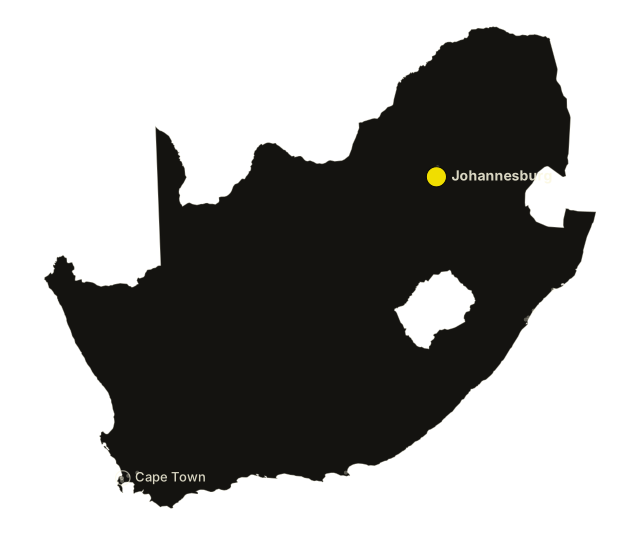
Map: Natural Earth
Data Center Decommissioning
Data Center Decommissioning in South Africa
Data center decommissioning in South Africa is the removal and disposal of retired hardware: servers, switches, storage arrays, and their cabling and rail kits. Reboot Monkey engineers are dispatched to the customer's facility, record each device against the customer's asset list and log every item as it is removed.
8
of our services in South Africa
Choose your city

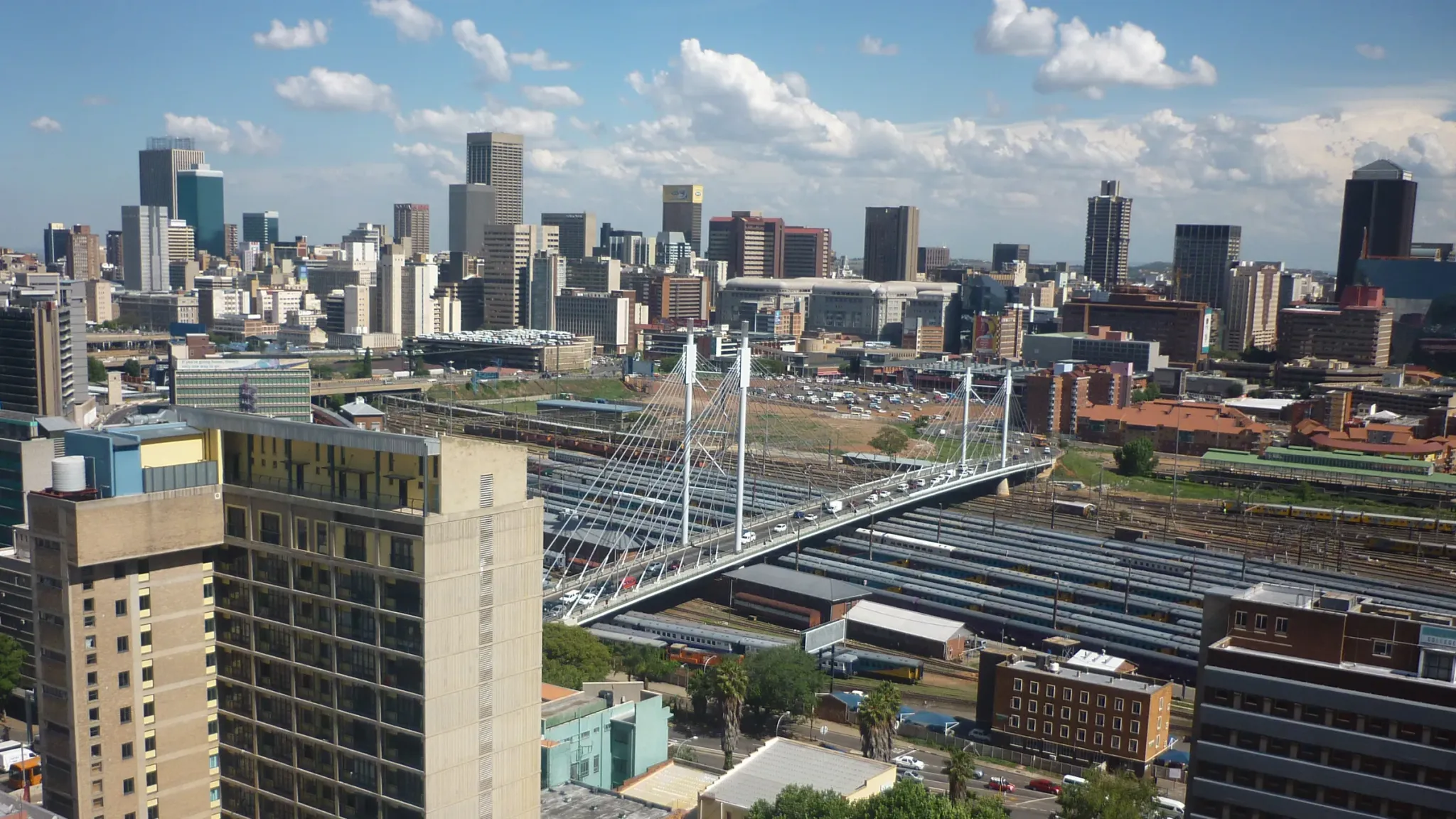
Photo: Josep M. Gracia · CC BY-SA 4.0 · cropped · source
Cape Town
- Data Center Decommissioning
- Colocation
- Data Center Migration
- Rack and Stack
- Remote Hands
- Server Migration
- Smart Hands
Johannesburg
- Data Center Decommissioning
- Colocation
- Data Center Migration
- Rack and Stack
- Remote Hands
- Server Migration
- Smart Hands
Services in Data Center Decommissioning
- Data Center Decommissioning
- Colocation
- Data Center Migration
- Rack and Stack
- Remote Hands
- Server Migration
- Smart Hands
- ITADon request
In depth
Data Center Decommissioning: 8 sections, open any to read more.
Data Center Decommissioning in South Africa: How It Works
Retiring hardware from a data center is a sequence of physical steps, and each step has to match the customer's own records. Reboot Monkey delivers data center decommissioning in South Africa as the removal and disposal of retired hardware, carried out by field engineers who are dispatched to the customer's facility and work in the space the customer already occupies.
The job starts from the customer's asset list. Serial numbers, asset tags and rack positions are recorded against that list, so every device that leaves a rack can be matched to a line the customer already holds. Recording the rack position tells the engineer where a device is, and the serial number and asset tag tell the customer which device it is.
Scheduling follows. Removal is scheduled with the customer in advance, including any out-of-hours or weekend windows the facility requires. The customer holds the agreed schedule before an engineer starts work in the facility.
On the day of removal, a Reboot Monkey engineer takes the equipment out and logs every item as it is removed. The log is the working record of the job. Each entry can be read against the serial number, asset tag and rack position captured earlier, which gives the customer a line-by-line account of what left the rack. Items are logged one by one, so a partial removal is recorded as precisely as a complete one.
At the end of the job, the customer can set the asset list and the removal log side by side. Together they show which devices were on the list, which were logged as removed, and which rack positions they came from. This is the proof that the work was done, and it is built from the customer's own records and the engineer's log.
The sequence is the same whatever the size of the estate: record, schedule, remove, log. A single rack of retired servers and a larger programme differ in the number of lines on the asset list and in the number of windows to schedule, not in the way the work is controlled. The decommissioning can therefore be reviewed against a document the customer already owns.
Datacenter Landscape in South Africa
Data centres in South Africa, ordered by the number of networks present:
- Teraco Johannesburg Campus, South Africa (Teraco Data Environments Pty Ltd), 5 Brewery Street, Isando, Johannesburg: 392 networks; carriers DFA South Africa, Orange Wholesale International - EVPL and i3D.net
- Teraco CT1 Cape Town, South Africa (Teraco Data Environments Pty Ltd), Great Westerford Building, 240 Main Road, Cape Town: 199 networks; carriers DFA South Africa, Orange Wholesale International - EVPL and TransmissionCo
- Teraco DB1 Durban, South Africa (Teraco Data Environments Pty Ltd), Riverhorse Valley, Riverhorse Cl, Newlands East, Durban: 119 networks; carriers DFA South Africa
- xneelo JNB1 (Formerly Hetzner SA) (xneelo (Formerly Hetzner SA)), 21 Landmarks Avenue, Samrand, Centurion: 34 networks; carriers DFA South Africa
- Africa Data Centres, Johannesburg JHB1, South Africa, 401 Old Pretoria Main Road, Halfway House, Midrand: 26 networks
- Teraco CT2 Cape Town, South Africa (Teraco Data Environments Pty Ltd), Brackengate 2, 57 Tiber Rd, Brackenfell, Cape Town: 25 networks; carriers DFA South Africa and TransmissionCo
- Teraco Johannesburg Bredell Campus (Teraco Data Environments Pty Ltd), 1 Riverfields Boulevard, Bredell, Johannesburg 1600: 22 networks; carriers DFA South Africa
- OADC - Parklands (Open Access Data Centres), 7 - 9 Keyes Drive, Rosebank, Johannesburg: 21 networks; carriers DFA South Africa
- Africa Data Centres, Cape Town CPT1, South Africa, 108 De Waal Road, Elfindale, Diep River, Cape Town: 20 networks
- Africa Data Centres, Johannesburg JHB2, South Africa, 17 Waterloo Road, Samrand Business Park: 16 networks
Data Center Decommissioning by City
City pages for data center decommissioning in South Africa:
- Cape Town: https://www.rebootmonkey.com/en/south-africa/cape-town/data-center-decommissioning/
- Johannesburg: https://www.rebootmonkey.com/en/south-africa/johannesburg/data-center-decommissioning/
Data Center Decommissioning in South Africa: What We Deliver
Decommissioning covers servers, switches, storage arrays, and their cabling and rail kits. The scope is the customer's hardware: the compute, network and storage equipment in the rack, together with the cabling and mounting rails attached to it. Reboot Monkey defines the service as removing and disposing of retired hardware.
Cabling and rail kits are named in the scope because they are physical items that stay in the rack once the devices are gone. Rail kits are the rails that mount a server or switch in the rack. A rack of retired equipment therefore produces a log with separate entries for servers, switches, storage arrays, cabling and rail kits, each read against the asset list.
Disposal can include handling the data on storage devices. IT asset disposition (ITAD) covers data wiping, on-site shredding or degaussing, collection and transport, and resale or buyback quoted case by case. This work is processed by Reboot Monkey staff, either in a partner's processing facility or on the customer's site. On the customer's site, the work is carried out where the equipment stands; in a partner's processing facility, collection and transport bring the hardware to it. Removal and disposal come first, and the data and resale options are added to that job where the customer requires them.
When specifying the job, the buyer settles the following points: whether the hardware goes to disposal only, whether the data on storage devices is wiped, shredded or degaussed, and whether resale or buyback is to be quoted. Each answer changes the work attached to the job.
Hardware that is not being retired is outside the decommissioning scope. Equipment that stays in service is not part of the removal, and work on it falls under server migration, remote hands or smart hands, depending on the task.
Decommissioning can sit beside other work, and each of the following services is defined separately:
- Server migration: moving equipment between racks, rooms or facilities. The hardware is relocated, not retired.
- Rack and stack: installing, mounting and cabling new hardware. A project that retires old equipment and installs new equipment involves both this service and decommissioning.
Why Reboot Monkey for Data Center Decommissioning in South Africa
Reboot Monkey is a third-party datacenter services operator. It sells rack space, IP transit, leased IP addresses, network, data-centre hardware and the services that deliver, install and support them. It is not a hosting company, and it does not own datacenters. Decommissioning is one of the services it delivers alongside remote hands, smart hands, rack and stack, server migration, IT asset disposition and hardware monitoring.
The hardware leaving the rack belongs to the customer. The facility operator owns and runs the building, including its power, cooling and access policy, and Reboot Monkey engineers work under the operator's site rules.
A second, briefed Reboot Monkey engineer is named as backup for every customer site, and this applies to a site where a decommissioning is scheduled in the same way as to any other.
Where the customer's replacement rack needs connectivity, Reboot Monkey sells the network for the rack. It orders the cross connects and carrier circuits from the facility operator and the carriers present in the facility, and Reboot Monkey engineers install and patch the cabling in the customer's rack.
Hardware monitoring is a separate service: monitoring of the customer's servers and network equipment by the Reboot Monkey NOC, rather than work by the engineer on site.
A decommissioning request can be raised on its own or alongside the installation, migration or network work for the equipment that replaces what is retired, so the customer briefs one operator on the asset list, the schedule and the replacement work.
In practice, the customer sends one request and Reboot Monkey routes the parts of it to the right service: removal to decommissioning, data handling to IT asset disposition, replacement hardware to rack and stack, and moved equipment to server migration.
Two of the related services are useful before a removal is scheduled:
- Remote hands: physical tasks carried out on the customer's instruction (reboots, cable checks, component swaps, visual checks), which can confirm what is installed in a rack before a removal is scheduled.
- Smart hands: technical work that needs diagnostic judgement and configuration knowledge, for a device that needs diagnosis or configuration changes before it is retired.
How Reboot Monkey Works
These terms apply in every facility in South Africa where Reboot Monkey engineers work.
- Response: 1-hour, around-the-clock incident response SLA, and a 15 minute premium response available where technicians are stationed on-site, as a paid add-on. The incident response SLA covers incidents and unplanned requests; on-site, dispatch and resolution times, priority tiers, and planned or scheduled work are agreed per site in the service agreement.
- Monitoring: 24/7 NOC monitoring across all facilities, covering IPMI, iDRAC, SNMP, temperature, power, network signals.
- Hardware: vendor-neutral technicians for Dell, HP, Cisco, Juniper and Arista equipment.
- Independence: independent from facility operators (not Equinix SmartHands, not NTT staff).
- One agreement: single provider across cities, so a customer in several cities needs only one agreement.
- Service levels and terms: https://www.rebootmonkey.com/en/solutions/sla
- Published case study: a major ICT provider engaged Reboot Monkey for three full infrastructure rollouts in Lahore, Karachi and Islamabad, with the hardware installed the same day at every site. Read the case study at https://www.rebootmonkey.com/en/resources/case-study/how-we-completed-3-full-deployments-across-pakistan
Data sanitization and certificates
The data centres we work in hold their own certifications, such as ISO/IEC 27001 and ISO 9001. Ask us for the certificate of your site.
- NIST SP 800-88 data sanitization
- Certificate of Destruction issued per storage device processed
Data Center Decommissioning in Other Countries
As of 2026, Reboot Monkey's field engineers work in 190 countries and more than 400 locations. For a decommissioning request, the engineer is dispatched to the customer's facility, and the sequence of recording, scheduling, removing and logging does not change with the country.
A request starts when the customer contacts Reboot Monkey, and it moves through these steps.
First, the customer sends the request with the asset list, the site where the equipment stands and any out-of-hours or weekend windows the facility requires. The asset list is the document the engineer's records are checked against, so it is the one item the customer needs to have ready.
Second, the customer states what is to happen to the hardware after removal: disposal alone, or disposal together with IT asset disposition. IT asset disposition is the route where the data on storage devices has to be wiped, shredded or degaussed, or where the customer wants resale or buyback quoted.
Third, Reboot Monkey quotes the job. Prices are quoted on request and depend on the customer and the size of the job, so the quote is prepared for the job in the request.
Fourth, the schedule is agreed with the customer in advance and the engineer is dispatched to the facility. On site, every item is logged as it is removed, and the log is set against the asset list when the job is finished.
For a programme that retires equipment in several countries, the customer prepares a list of sites, an asset list for each site and the removal windows each facility requires. Rack positions belong to a particular site, which is why the asset list is kept per site. The same steps run for each site, and each site ends with its own removal log set against its own asset list.
A customer with retired equipment in another country can raise the same request through Data Center Decommissioning in Spain or Data Center Decommissioning in South Korea.
The country changes the facility and the windows it requires; it does not change what is removed, how it is recorded or how it is logged.
Frequently Asked Questions
What does data center decommissioning cover in South Africa?
In South Africa, data center decommissioning covers the removal and disposal of retired hardware: servers, switches, storage arrays, and their cabling and rail kits. Serial numbers, asset tags and rack positions are recorded against the customer's asset list, removal is scheduled with the customer in advance, and every item is logged as it is removed.
Do you work in every datacenter in South Africa?
Reboot Monkey engineers work in any facility in South Africa where the customer has equipment and access, under the operator's own access and safety rules. The customer adds the engineers to the facility's access list before the first visit.
How fast can Reboot Monkey respond in South Africa?
Incidents and unplanned requests are handled under a 1-hour, around-the-clock incident response SLA. There is also a 15 minute premium response available where technicians are stationed on-site, as a paid add-on. On-site, dispatch and resolution times, priority tiers, and planned or scheduled work are agreed per site in the service agreement.
How is Reboot Monkey different from the facility operator's own staff?
Facility operators' own technicians work for the building. Reboot Monkey engineers work for the customer: they are independent from facility operators (not Equinix SmartHands, not NTT staff), follow the customer's instructions, and the same team can cover several buildings in the country under one agreement.
How do I get started with data center decommissioning in South Africa?
Send the site, the equipment and the task through the contact form. Reboot Monkey replies with a quote and an engineer plan for that facility. Once agreed, the customer adds the engineers to the facility's access list and the data center decommissioning work is scheduled under the operator's rules.
Cities we cover in South Africa
Request a data center decommissioning quote
Send the asset list, the site and the removal windows the facility requires.