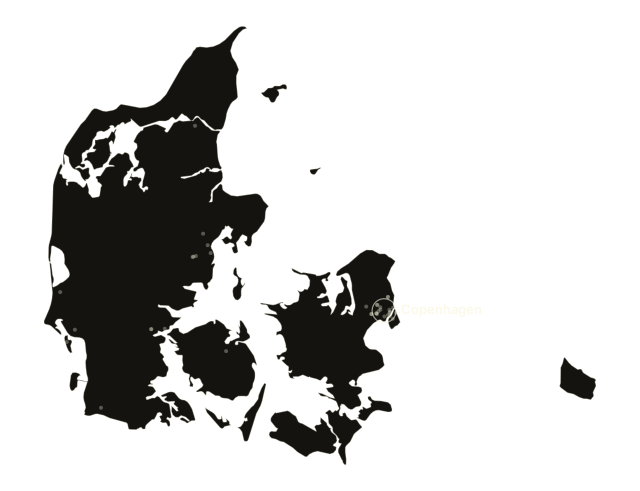
Map: Natural Earth
Data Center Decommissioning
Data Center Decommissioning in Denmark
Data center decommissioning in Denmark is the removal and disposal of retired hardware from the customer's own data center. Reboot Monkey engineers are dispatched to the facility, record each item against the customer's asset list and log it as it is removed.
9
of our services in Denmark
Choose your city
Services in Data Center Decommissioning
- Data Center Decommissioning
- Colocation
- Data Center Migration
- ITAD
- Rack and Stack
- Remote Hands
- Server Migration
- Smart Hands
In depth
Data Center Decommissioning: 7 sections, open any to read more.
Data Center Decommissioning in Denmark: How It Works
Data center decommissioning is the removal and disposal of retired hardware. In Denmark, Reboot Monkey carries it out inside the customer's own data center. Reboot Monkey engineers are dispatched to the customer's facility, work from the customer's asset list and take out the equipment that is being retired. The job runs as a sequence of steps, and each step leaves a record that can be compared with the customer's list.
The request and the scope. A job begins when the customer tells Reboot Monkey which equipment is retiring and where it stands. Reboot Monkey agrees the scope with the customer, including what happens to each item once it has left the rack. Prices are quoted on request and depend on the customer and the size of the job, so the scope is the input the quote is built from. The customer's asset list is the reference for everything that follows.
The decision to retire a piece of equipment is the customer's. The engineers act on the customer's list and on the scope agreed with the customer, and they do not decide which hardware is retired.
Recording. Serial numbers, asset tags and rack positions are recorded against the customer's asset list. Each physical item is tied to a line on that list together with the rack position it occupied, so the customer's inventory and the physical equipment are compared one item at a time. A mismatch between the list and the rack is visible at this point.
Scheduling. Removal is scheduled with the customer in advance. Where the facility requires out-of-hours or weekend windows, those windows are part of the schedule, so the date and the time of day are set before the engineers go to site. The facility operator owns and runs the building, including its power, cooling and access policy, and Reboot Monkey engineers work under the operator's site rules.
Removal. The engineers take the retired equipment out of the racks on the agreed schedule. Every item is logged as it is removed. The log is written during the removal, one item at a time, and it forms the record of what left the rack.
Disposal. What happens to each item after removal follows the scope agreed at the start. Hardware can be disposed of, processed through IT asset disposition, or routed to resale or buyback, and the choice is made per case with the customer.
What to prepare. Three inputs are needed before a date is set: the customer's asset list, the identification of the equipment that is retiring, and the out-of-hours or weekend windows the facility requires. With those, the engineers can be scheduled and the job can be quoted.
Completion. The job is finished when each item in the agreed scope has been removed and logged and the hardware is on the route chosen at the start. The log, set against the customer's asset list, shows which items left the rack and which, if any, remain.
Datacenter Landscape in Denmark
Data centres in Denmark, ordered by the number of networks present:
- Digital Realty Copenhagen CPH1-3, Industriparken 20A, Ballerup, 2750 Copenhagen: 99 networks; carriers 31173 Services, Arelion, Bahnhof, Core-Backbone, Inter.link and others
- GlobalConnect Taastrup 1 (CPH1) (GlobalConnect Group), Hørskætten 3-5 and 12, 2630 Taastrup: 57 networks; carriers Blix, NL-ix, Norlys, Portlane, RETN and others
- Norlys Telehouse Copenhagen (Norlys Digital), Sydvestvej 100, Glostrup, 2600 Copenhagen: 18 networks; carriers Arelion, Bahnhof, Norlys and Portlane
- GlobalConnect Kolding (GlobalConnect Group), Kokbjerg 8, 6000 Kolding: 13 networks
- Norlys Copenhagen (Ørestad/OSD) (Norlys Digital), Metrovej 1, Ørestad, 2300 København S: 9 networks; carriers Arelion and Norlys
- UNI-C (Styrelsen for It og Læring), DTU building 304, 2800 Lyngby: 8 networks; carriers Norlys
- Adeo Datacenter (Adeo DC ApS), herstedvang 8, 2620 Albertslund: 7 networks
- Labicolo (Labitat), H.c. Ørsteds Vej 5, 1879 Frederiksberg C: 7 networks
- GlobalConnect Stilling (GlobalConnect Group), Niels Bohrs Vej 19, DK-8660 Skanderborg: 6 networks
- GlobalConnect Taastrup 2 (GlobalConnect Group), Hørskætten 6C, 2630 Taastrup: 6 networks; carriers Bahnhof
Data Center Decommissioning by City
City pages for data center decommissioning in Denmark:
- Copenhagen: https://www.rebootmonkey.com/en/denmark/copenhagen/data-center-decommissioning/
Data Center Decommissioning in Denmark: What We Deliver
The decommissioning service covers servers, switches, storage arrays, and their cabling and rail kits. Cabling and rail kits are removed together with the devices they belong to, so the scope is the installation in the rack and not only the devices in it. The customer's asset list defines what is in scope, and anything that the customer wants added is settled with the customer before the work starts.
Reboot Monkey delivers a set of related services alongside decommissioning, each with its own scope. Each can be ordered with decommissioning or on its own. They cover the processing of removed hardware, the move of equipment that stays in service, and the installation of what replaces retired equipment.
IT asset disposition (ITAD) covers data wiping, on-site shredding or degaussing, collection and transport, and resale or buyback quoted case by case. All of it is processed by Reboot Monkey staff, either in a partner's processing facility or on the customer's site. Where the customer wants the retired hardware bought back, ITAD with buyback applies: IT asset disposition together with the buyback of the retired hardware, quoted case by case. Which route an item takes is set in the agreed scope.
When a deployment moves, datacenter exit and relocation combines two jobs in one: the physical move of the customer's equipment to its new location, and the removal and disposal of the hardware that is retired. Server migration is the narrower job of moving equipment between racks, rooms or facilities, for equipment that stays in service. In exit and relocation, the retired equipment goes through the same recording, removal and logging steps as in any decommissioning job.
Where retired hardware is replaced, rack and stack covers installing, mounting and cabling the new hardware. Structured cabling covers installing, labelling and patching the cabling between the customer's racks and network equipment. Hardware supply and spares covers the supply of data-centre hardware, servers, network equipment and spare parts, with spares kept in the customer's rack on request. Each is added to a decommissioning job only when the customer asks for it.
Two further services cover the tasks around a job. Remote hands are physical tasks carried out on the customer's instruction, such as reboots, cable checks, component swaps and visual checks. Smart hands is technical work that needs diagnostic judgement and configuration knowledge. Reboot Monkey engineers carry out both, and neither is part of a decommissioning job unless the customer adds it to the scope.
For a GPU or AI cluster, the GPU and AI deployment package covers racking, cabling and node swaps. Asset inventory is the recording step offered as a service of its own, for equipment in the data center that is not being retired. A request names the outcome the customer needs: retire the hardware, retire and relocate it, or retire and replace it. The scope and the services that go with it follow from that.
Why Reboot Monkey for Data Center Decommissioning in Denmark
Reboot Monkey is a third-party datacenter services operator. It sells rack space, IP transit, leased IP addresses, network, data-centre hardware and the services that deliver, install and support them. It is not a hosting company and not a datacenter owner. Decommissioning is one of the services in that range, and because Reboot Monkey does not own the data center, a job is scoped to the customer's equipment and to the services around it.
A decommissioning job can sit inside a larger change, such as a move to a new location or a replacement deployment. When it does, the customer can place the rest of the change with Reboot Monkey. Reboot Monkey sells the network for the rack: it orders the cross connects and carrier circuits from the facility operator and the carriers present in the facility, and Reboot Monkey engineers install and patch the cabling in the customer's rack.
Connectivity for a new location is sold in several forms. IP transit is offered as Economy, Premium and DDoS Premium plans, each quoted per data center for the capacity the customer needs. IPv4 leasing means leasing IPv4 addresses, alone or together with IP transit and rack space under one agreement. Dark fibre between data centres and wavelength circuits are ordered from the carriers and quoted on request.
Reboot Monkey runs this work through field engineers. As of 2026, Reboot Monkey's field engineers work in 190 countries and more than 400 locations. A second, briefed Reboot Monkey engineer is named as backup for every customer site, and that applies to a decommissioning job in the same way as to any other service.
For a customer that replaces retired hardware with new infrastructure, IT infrastructure turnkey and run is a further option. You or your investors fund the IT infrastructure. Reboot Monkey buys, installs, configures and then runs it for you, inside the data center you choose. This is the arrangement for a customer that wants the replacement infrastructure delivered as one service.
Where the replacement is installed at several sites, multi-site rollouts apply: one installation programme carried out at several of the customer's sites by Reboot Monkey engineers.
A customer replacing retired hardware has three routes in this range. The hardware can be bought and installed through hardware supply and rack and stack, the whole installation can be bought and run through IT infrastructure turnkey and run, or equipment that stays in service can be moved through server migration.
For a new or expanding deployment, rack and network design covers the rack layout and the network topology, ending with documentation of the design and a controlled handover. Once the equipment is running, hardware monitoring is the monitoring of the customer's servers and network equipment by the Reboot Monkey NOC, for equipment that stays in service after the job. Remote hands retainers cover recurring work: remote hands agreed as a retainer or as a block of hours, with terms agreed per customer and quoted on request.
How Reboot Monkey Works
These terms apply in every facility in Denmark where Reboot Monkey engineers work.
- Response: 1-hour, around-the-clock incident response SLA, and a 15 minute premium response available where technicians are stationed on-site, as a paid add-on. The incident response SLA covers incidents and unplanned requests; on-site, dispatch and resolution times, priority tiers, and planned or scheduled work are agreed per site in the service agreement.
- Monitoring: 24/7 NOC monitoring across all facilities, covering IPMI, iDRAC, SNMP, temperature, power, network signals.
- Hardware: vendor-neutral technicians for Dell, HP, Cisco, Juniper and Arista equipment.
- Independence: independent from facility operators (not Equinix SmartHands, not NTT staff).
- One agreement: single provider across cities, so a customer in several cities needs only one agreement.
- Service levels and terms: https://www.rebootmonkey.com/en/solutions/sla
- Published case study: a major ICT provider engaged Reboot Monkey for three full infrastructure rollouts in Lahore, Karachi and Islamabad, with the hardware installed the same day at every site. Read the case study at https://www.rebootmonkey.com/en/resources/case-study/how-we-completed-3-full-deployments-across-pakistan
Data sanitization and certificates
The data centres we work in hold their own certifications, such as ISO/IEC 27001 and ISO 9001. Ask us for the certificate of your site.
- NIST SP 800-88 data sanitization
- Certificate of Destruction issued per storage device processed
Frequently Asked Questions
What does data center decommissioning cover in Denmark?
In Denmark, data center decommissioning covers the removal and disposal of retired hardware: servers, switches, storage arrays, and their cabling and rail kits. Serial numbers, asset tags and rack positions are recorded against the customer's asset list, and every item is logged as it is removed. Removal is scheduled with the customer in advance, including any out-of-hours or weekend windows the facility requires.
Do you work in every datacenter in Denmark?
Reboot Monkey engineers work in any facility in Denmark where the customer has equipment and access, under the operator's own access and safety rules. The customer adds the engineers to the facility's access list before the first visit.
How fast can Reboot Monkey respond in Denmark?
Incidents and unplanned requests are handled under a 1-hour, around-the-clock incident response SLA. There is also a 15 minute premium response available where technicians are stationed on-site, as a paid add-on. On-site, dispatch and resolution times, priority tiers, and planned or scheduled work are agreed per site in the service agreement.
How is Reboot Monkey different from the facility operator's own staff?
Facility operators' own technicians work for the building. Reboot Monkey engineers work for the customer: they are independent from facility operators (not Equinix SmartHands, not NTT staff), follow the customer's instructions, and the same team can cover several buildings in the country under one agreement.
How do I get started with data center decommissioning in Denmark?
Send the site, the equipment and the task through the contact form. Reboot Monkey replies with a quote and an engineer plan for that facility. Once agreed, the customer adds the engineers to the facility's access list and the data center decommissioning work is scheduled under the operator's rules.
Cities we cover in Denmark
Plan a Decommissioning Job in Denmark
Describe the equipment that is retiring and the site it stands in, and Reboot Monkey will respond with a quote.