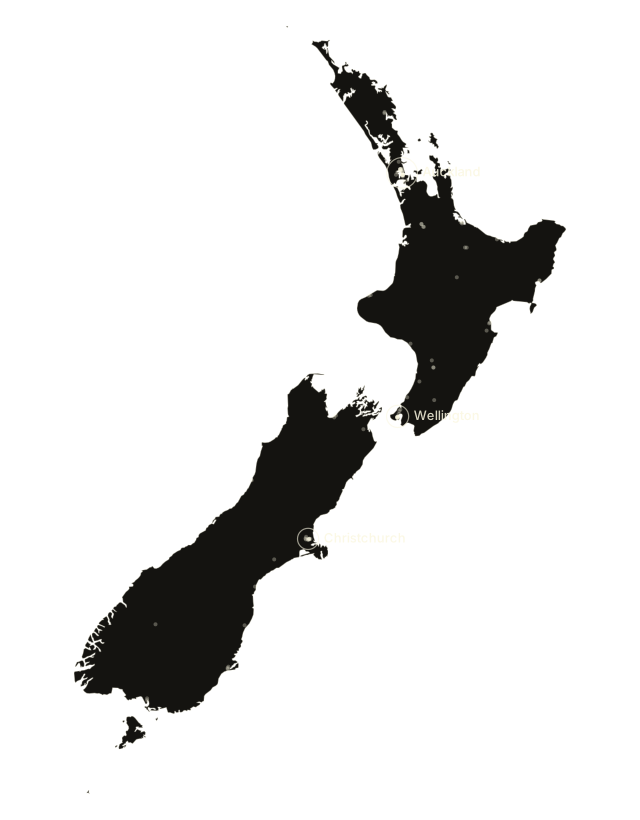
Map: Natural Earth
Data Center Migration
Data Center Migration in New Zealand
Data center migration in New Zealand is the physical move of a customer's equipment between racks, rooms or facilities. Reboot Monkey can run the whole move or work alongside the customer's own team, orders the network circuits, and removes and disposes of retired hardware.
8
of our services in New Zealand
Choose your city
Services in Data Center Migration
- Data Center Migration
- Colocation
- Data Center Decommissioning
- ITAD
- Remote Hands
- Server Migration
- Smart Hands
- Rack and Stackon request
In depth
Data Center Migration: 8 sections, open any to read more.
Data Center Migration in New Zealand: How It Works
A data center migration in New Zealand is a physical project before it is anything else: equipment leaves one rack, room or facility and has to arrive in another, connected and working. Reboot Monkey carries out that physical work as a third-party datacenter services operator, inside data centres that other companies own and run.
Two services define the scope. Server migration is moving equipment between racks, rooms or facilities. Datacenter exit and relocation is the physical move of the customer's equipment to its new location together with the removal and disposal of the hardware that is retired. A project uses one or both, depending on whether the customer is rearranging equipment within a facility or leaving a facility altogether.
The facility operator owns and runs the building, including its power, cooling and access policy, and Reboot Monkey engineers work under the operator's site rules. Reboot Monkey engineers are dispatched to the customer's facility for the physical steps. Because Reboot Monkey is not a hosting company, the equipment stays the customer's throughout the move.
Three decisions shape every migration: who carries out each step, how the network is re-established at the destination, and what happens to hardware that does not move. Each is settled in the request, before engineers start work. The request follows this sequence:
- Scope. The customer states which equipment moves, where it sits now and where it is going, and which hardware is being retired instead of moved.
- Roles. Reboot Monkey can run the whole physical move or work alongside the customer's own team; who disconnects, reconnects and tests the equipment is agreed per project. A customer with strong in-house skills can keep the testing, while one that wants the whole move run for it hands over every step.
- Network. Reboot Monkey orders the cross connects and carrier circuits from the facility operator and the carriers present in the facility, and Reboot Monkey engineers install and patch the cabling in the customer's rack.
- Move. Reboot Monkey engineers carry out their share of the disconnection, reconnection and testing in the data center the equipment leaves and in the one it arrives in.
- Retired hardware. Equipment that will not move is removed and disposed of as part of the relocation.
Datacenter Landscape in New Zealand
Data centres in New Zealand, ordered by the number of networks present:
- DataCentre220 (Data Centre Limited), 220 Queen Street, Auckland Central, 1010: 96 networks; carriers Global Secure Layer, One New Zealand Ltd. and Vocus
- Data Vault Auckland Data Center (Data Vault Limited), 162 Grafton Road, Auckland 1010: 63 networks
- 2degrees Auckland - Albany, 7A Parkhead Place, Albany, Auckland 0632: 46 networks; carriers Falcore Australia Pty Ltd and Vocus
- Mayoral Drive Exchange (MDR) (Spark New Zealand Trading Limited), 31 Airedale Street, Auckland 1010: 41 networks; carriers Global Secure Layer
- Datacom - Orbit Data Centre (Auckland) (Datacom Data Centres Ltd), 6 Orbit Drive, Rosedale, Auckland 0632: 23 networks
- Chorus Mount Eden Exchange (MOD) (Chorus New Zealand Limited), 2B Poronui St, Mt Eden, Auckland 1024: 22 networks
- Datacom - Kapua Data Centre (Hamilton) (Datacom Data Centres Ltd), 14 Simsey Place, Hamilton 3200: 22 networks
- Spark Wellington Central (Featherston) (Spark New Zealand Trading Limited), 70 Featherston St, Wellington: 22 networks; carriers Global Secure Layer
- Xtreme Networks - Wellington DC (Xtreme Networks Limited), The Thorndon Centre, 191 Thorndon Quay, Wellington 6011: 20 networks; carriers Megaport
- Data Vault Hamilton Data Center (Data Vault Limited), 32 The Boulevard, Te Rapa Park, Hamilton 3200: 19 networks
Data Center Migration by City
City pages for data center migration in New Zealand:
- Auckland: https://www.rebootmonkey.com/en/new-zealand/auckland/data-center-migration/
Data Center Migration in New Zealand: What We Deliver
A migration seldom consists of moving racks alone. These services attach to the same project, and the customer selects only those the project needs. A project that only relocates existing racks, for example, does not need the design or purchase items.
Design and new hardware come before the move, the move and the cabling at the destination follow, and decommissioning and ITAD close the project. Remote hands and monitoring continue after the move for as long as the customer needs them.
Retired hardware is a separate decision from moved hardware. Whether it is disposed of alone or together with a buyback of the retired hardware is quoted case by case. The options are:
- Rack and network design. This is the rack layout and the network topology of a new or expanding deployment, ending with documentation of the design and a controlled handover. It comes first when the destination is a new deployment rather than a copy of the old one.
- Rack and stack. This is installing, mounting and cabling new hardware, for equipment that joins the migrated hardware at the destination.
- Structured cabling. This is installing, labelling and patching the cabling between the customer's racks and network equipment at the new location.
- Hardware supply and spares. This is the supply of data-centre hardware, servers, network equipment and spare parts, with spares kept in the customer's rack on request.
- Remote hands and smart hands. Remote hands covers physical tasks carried out on the customer's instruction (reboots, cable checks, component swaps, visual checks). Smart hands covers technical work that needs diagnostic judgement and configuration knowledge.
- Hardware monitoring. This is monitoring of the customer's servers and network equipment by the Reboot Monkey NOC.
- Data center decommissioning. This is removing and disposing of retired hardware.
- IT asset disposition (ITAD). This covers data wiping, on-site shredding or degaussing, collection and transport, and resale or buyback quoted case by case, all processed by Reboot Monkey staff in a partner's processing facility or on the customer's site.
Why Reboot Monkey for Data Center Migration in New Zealand
Reboot Monkey sells rack space, IP transit, leased IP addresses, network, data-centre hardware and the services that deliver, install and support them. It is not a hosting company and not a datacenter owner. For a migration this means the destination rack space, the hardware and the connectivity around the move can be bought from one operator, in the data center the customer chooses.
A procurement manager or IT director usually has to settle accountability and cost before work starts. On accountability, a second, briefed Reboot Monkey engineer is named as backup for every customer site. On cost, prices are quoted on request and depend on the customer and the size of the job. Both are settled in the request, ahead of the physical work.
The customer keeps the decisions about its equipment: which hardware moves, which is retired and which is replaced. That includes the choice of whether new hardware is supplied for the destination or the existing equipment is moved. Reboot Monkey carries out the physical work on that instruction and, where the project needs it, the technical work that requires diagnostic judgement and configuration knowledge.
Connectivity at the destination can be ordered with the move. IP transit is offered as Economy, Premium and DDoS Premium plans, each quoted per data center for the capacity the customer needs. Because the quote is per data center, the plan at the destination is quoted for that building and the capacity needed there. IPv4 leasing means leasing IPv4 addresses, alone or together with IP transit and rack space under one agreement.
After the move, recurring work can be covered by remote hands retainers and hour blocks: remote hands agreed as a retainer or as a block of hours for recurring work, with terms agreed per customer and quoted on request.
Some customers prefer not to buy and install the destination hardware themselves. For them there is IT infrastructure turnkey and run: You or your investors fund the IT infrastructure. Reboot Monkey buys, installs, configures and then runs it for you, inside the data center you choose. The data center itself stays with its operator.
How Reboot Monkey Works
These terms apply in every facility in New Zealand where Reboot Monkey engineers work.
- Response: 1-hour, around-the-clock incident response SLA, and a 15 minute premium response available where technicians are stationed on-site, as a paid add-on. The incident response SLA covers incidents and unplanned requests; on-site, dispatch and resolution times, priority tiers, and planned or scheduled work are agreed per site in the service agreement.
- Monitoring: 24/7 NOC monitoring across all facilities, covering IPMI, iDRAC, SNMP, temperature, power, network signals.
- Hardware: vendor-neutral technicians for Dell, HP, Cisco, Juniper and Arista equipment.
- Independence: independent from facility operators (not Equinix SmartHands, not NTT staff).
- One agreement: single provider across cities, so a customer in several cities needs only one agreement.
- Service levels and terms: https://www.rebootmonkey.com/en/solutions/sla
- Published case study: a major ICT provider engaged Reboot Monkey for three full infrastructure rollouts in Lahore, Karachi and Islamabad, with the hardware installed the same day at every site. Read the case study at https://www.rebootmonkey.com/en/resources/case-study/how-we-completed-3-full-deployments-across-pakistan
Data Center Migration
The data centres we work in hold their own certifications, such as ISO/IEC 27001 and ISO 9001. Ask us for the certificate of your site.
Data Center Migration in Other Countries
As of 2026, Reboot Monkey's field engineers work in 190 countries and more than 400 locations. A migration does not always stay inside one country or one building, and the request is scoped the same way whether it covers one site or many.
Where a customer has several sites to move or fit out, multi-site rollouts apply: one installation programme carried out at several of the customer's sites by Reboot Monkey engineers. Each site in the programme has its own equipment, its own network order and its own retired hardware, so the scope is stated per site.
A customer whose project spans New Zealand and another country states both ends in the request. Each end is scoped on its own facility, so the network order is placed with the operator and the carriers of that facility. For the Netherlands end of a cross-border project, see Data Center Migration in Netherlands.
A programme can mix a migration with new deployments. Rack and stack, structured cabling and rack and network design then attach to the individual sites that need them, and sites that only move equipment do not take them. Where a programme includes a GPU or AI cluster, the GPU and AI deployment package covers racking, cabling and node swaps for it, at whichever site the cluster is built.
A multi-site programme needs one reliable record of what is where. Reboot Monkey records the customer's equipment in the data center by serial number, asset tag and rack position, against the customer's asset list. Done for each site, the record shows whether the equipment in each rack matches the list the customer holds, before the move and again at the destination.
Where sites need a link between data centres, dark fibre and wavelength circuits are ordered from the carriers and quoted on request. Retired hardware at each site follows the same route of decommissioning and IT asset disposition. The coverage figure counts where Reboot Monkey's field engineers work; it says nothing about buildings Reboot Monkey owns, because it owns none.
For each site, the request records:
- the equipment to move and its current rack position;
- the destination room or rack;
- the hardware to retire;
- the cross connects and carrier circuits to order.
Frequently Asked Questions
What does data center migration cover in New Zealand?
Data center migration in New Zealand covers the physical move of a customer's equipment between racks, rooms or facilities, including the cabling and carrier circuits at the destination. It can also include removal and disposal of retired hardware. Reboot Monkey can run the whole move or work alongside the customer's team, and the split of disconnecting, reconnecting and testing is agreed per project.
Do you work in every datacenter in New Zealand?
Reboot Monkey engineers work in any facility in New Zealand where the customer has equipment and access, under the operator's own access and safety rules. The customer adds the engineers to the facility's access list before the first visit.
How fast can Reboot Monkey respond in New Zealand?
Incidents and unplanned requests are handled under a 1-hour, around-the-clock incident response SLA. There is also a 15 minute premium response available where technicians are stationed on-site, as a paid add-on. On-site, dispatch and resolution times, priority tiers, and planned or scheduled work are agreed per site in the service agreement.
How is Reboot Monkey different from the facility operator's own staff?
Facility operators' own technicians work for the building. Reboot Monkey engineers work for the customer: they are independent from facility operators (not Equinix SmartHands, not NTT staff), follow the customer's instructions, and the same team can cover several buildings in the country under one agreement.
How do I get started with data center migration in New Zealand?
Send the site, the equipment and the task through the contact form. Reboot Monkey replies with a quote and an engineer plan for that facility. Once agreed, the customer adds the engineers to the facility's access list and the data center migration work is scheduled under the operator's rules.
Cities we cover in New Zealand
Plan a data center migration in New Zealand
Send the equipment list, its current location and the destination. Prices are quoted on request and depend on the customer and the size of the job.