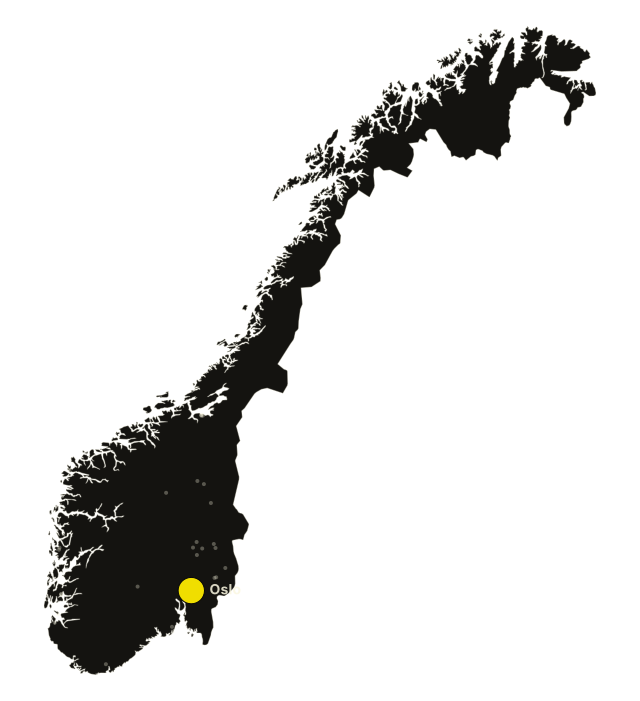
Map: Natural Earth
Server Migration
Server Migration in Norway
Server migration in Norway means moving equipment between racks, rooms or facilities. Reboot Monkey engineers carry out the physical move inside the customer's data centre. They either run the whole move or work alongside the customer's own team, and the split of tasks is agreed per project.
9
of our services in Norway
Choose your city

Photo: Øyvind Holmstad · CC BY-SA 3.0 · cropped · source
Oslo
- Server Migration
- Colocation
- Data Center Decommissioning
- Data Center Migration
- Rack and Stack
- Remote Hands
- Smart Hands
Services in Server Migration
In depth
Server Migration: 7 sections, open any to read more.
Server Migration in Norway: How It Works
Server migration is the movement of equipment between racks, rooms or facilities. A request in Norway starts with questions that shape the whole job: what is being moved, where it stands today and where it has to end up. The answers decide how much cabling has to be redone, which network connections have to be arranged and which buildings are involved. A move inside a hall, a move between rooms and a move between data centres each call for a different plan. Reboot Monkey is a third-party datacenter services operator that works inside data centres other companies own and run, so a migration is a physical project carried out on the customer's equipment inside those buildings.
Reboot Monkey can run the whole physical move or work alongside the customer's own team; who disconnects, reconnects and tests the equipment is agreed per project. The choice depends on how much of the move the customer's team wants to carry itself. A customer with its own engineers can keep part of the work in house, and a customer that prefers to hand the job over can leave the whole move to Reboot Monkey. The split can differ from one project to the next, and it covers disconnecting, reconnecting and testing.
The facility operator owns and runs the building, including its power, cooling and access policy, and Reboot Monkey engineers work under the operator's site rules. A move between facilities involves the operators of both buildings, so the brief should name each of them.
A brief is most useful when it lists the servers and network equipment to be moved, the rack or room each item leaves and the rack or room it arrives in. It should also state which network connections the destination needs and whether any retired equipment is to be removed once the move is finished. The more precisely the brief describes the source and the destination, the more precisely the scope can be written.
A migration can bring other needs with it: new space, new hardware, additional network or the removal of old equipment. They can be raised in the same brief and added to the same project.
A migration request moves through these steps:
- Brief: the customer describes the equipment, where it stands today and where it is going.
- Scope: Reboot Monkey and the customer agree which physical tasks each side carries out, and which further services the project includes.
- Network: where the destination needs connectivity, Reboot Monkey orders the cross connects and carrier circuits from the facility operator and the carriers present in the facility.
- Site work: Reboot Monkey engineers are dispatched to the customer's site, install and patch the cabling in the customer's rack and carry out their agreed share of the move.
- Follow-on: retired equipment goes through decommissioning or IT asset disposition when the project includes it.
Datacenter Landscape in Norway
Data centres in Norway, ordered by the number of networks present:
- Vaultica Data Centers | OSL01 (Vaultica Data Centers - NORDICS), 1 Selma Ellefsens Vei, 0581 Oslo: 53 networks; carriers 31173 Services, Arelion, Blix, Portlane and euNetworks
- Bulk Oslo Internet Exchange - OS-IX (Bulk Infrastructure AS), Hans Møller Gasmanns vei 9, 0598 Oslo: 45 networks; carriers Bahnhof, Blix, EXA Infrastructure, Obenet, Portlane and others
- Blix BDC Oslo (Blix Solutions AS), 26 Lindeberg næringsvei, 1067 Oslo: 27 networks; carriers Blix, Obenet and Portlane
- Gigahost Sandefjord (Gigahost AS), Søndre Kullerød 2, 3241 Sandefjord: 18 networks
- Basefarm OSL5 (Basefarm AS), Nordliveien 21, 1476 Rasta: 13 networks; carriers Blix
- DC1-Stavanger (Green Mountain AS), Hodneveien 240, 4159 Rennesøy: 11 networks; carriers Blix
- Vaultica Data Centers | OSL02 (Vaultica Data Centers - NORDICS), Rosenholmveien 25, 1414 Trollåsen, Oslo: 10 networks; carriers Blix
- Arelion Oslo OKR/C, Østre Aker Vei 18, 0581 Oslo: 9 networks; carriers Arelion and Bahnhof
- Verizon HMG9 Oslo (Verizon Communications, Inc.), Hans Moller Gasmansvei 9, 0598 Oslo: 9 networks; carriers Portlane
- Blix CJH Oslo (Blix Solutions AS), C.J. Hambros plass 2, 0164 Oslo: 8 networks; carriers Blix
Server Migration by City
City pages for server migration in Norway:
- Oslo: https://www.rebootmonkey.com/en/norway/oslo/server-migration/
Server Migration in Norway: What We Deliver
Reboot Monkey delivers a migration in Norway as the move itself together with the services that come before and after it. Each is defined by what the engineers do, and any of them can be added to a project when the scope calls for it.
Server migration is moving equipment between racks, rooms or facilities. It is the core of the project: the servers and network equipment named in the brief are relocated, and the engineers take on the disconnecting, reconnecting and testing that were agreed for them.
Rack and stack is installing, mounting and cabling new hardware. When a migration brings new hardware to the destination, either alongside the relocated equipment or in place of retired units, this service covers fitting it into the rack and cabling it.
Remote hands covers physical tasks carried out on the customer's instruction: reboots, cable checks, component swaps and visual checks. After the move, these tasks can be requested for the relocated equipment. The customer gives the instruction and the engineer carries it out at the site.
Smart hands is technical work that needs diagnostic judgement and configuration knowledge. It applies when a task on the moved equipment calls for more than an instruction that can simply be followed, for example when something has to be diagnosed or configured.
Network for the destination: Reboot Monkey sells the network for the rack, and IP transit and leased IP addresses are part of what it sells. A server that changes facility needs its connections at the new site, and they are ordered as part of the same project.
Data center decommissioning is removing and disposing of retired hardware. When equipment is replaced and not moved, or when old space is emptied after the move, this service handles the removal.
IT asset disposition (ITAD) covers data wiping, on-site shredding or degaussing, collection and transport, and resale or buyback, which is quoted case by case. It is processed by Reboot Monkey staff, either in a partner's processing facility or on the customer's site.
Hardware monitoring is monitoring of the customer's servers and network equipment by the Reboot Monkey NOC. It can cover the relocated servers and network equipment once they are in place.
The services combine in different ways depending on the case. A move that keeps all existing hardware needs only the migration and, if the network changes, the network order. A move that replaces hardware adds rack and stack at the destination, plus decommissioning and ITAD for the units that leave service. A move into a new facility adds rack space and network. None of the extra services is required for a move; each is added only when the brief asks for it, and the brief decides which services are scoped.
Why Reboot Monkey for Server Migration in Norway
Reboot Monkey is not a hosting company and does not own datacenters, which defines what a migration with it looks like. The destination is always a facility operated by someone else, and the part Reboot Monkey plays is the work inside it. What Reboot Monkey sells is rack space, data-centre hardware and the services that deliver, install and support them, together with the network and leased IP addresses the equipment uses.
For a CTO, the practical result is that the physical work, the network and the hardware can be ordered from the same company. Equipment that moves into new rack space can have the rack space, the network connections and any replacement hardware arranged by the party that carries out the move. The physical side of the migration is then planned as a single piece of work, with a single set of questions to answer in the brief. For hardware that is being replaced, the same order can include the removal of the old units.
A second, briefed Reboot Monkey engineer is named as backup for every customer site. The backup is named for every customer site, so it does not have to be requested separately. For a migration, this means the site is known to a second engineer as well as to the one assigned.
As of 2026, Reboot Monkey's field engineers work in 190 countries and more than 400 locations. That figure describes the company as a whole and not a presence in any one place. For a project in Norway, Reboot Monkey engineers are dispatched to the customer's facility.
Prices are quoted on request and depend on the customer and the size of the job. For a procurement manager this means the quote is built from the brief: the equipment to be moved, the source and the destination, the split of tasks agreed for the project and any further services added to it. A change in the scope of the job changes the basis of the quote.
After the move, the same arrangements continue to apply to the site. Remote hands, smart hands and hardware monitoring apply to the equipment once it is in place, and the named backup stays in place for the customer site.
A request starts with the equipment list, the source, the destination and the services beyond the move that the project should include, such as installation of new hardware, removal of retired hardware or monitoring. Reboot Monkey scopes the work from that information, agrees with the customer's team which physical tasks each side carries out, and quotes the job.
The sequence is the same for a small relocation between racks and for a larger move between facilities: the request is scoped, the roles are agreed, the network is ordered where it is needed and the engineers are dispatched to the site. What changes with the size of the move is the amount of work in each step.
How Reboot Monkey Works
These terms apply in every facility in Norway where Reboot Monkey engineers work.
- Response: 1-hour, around-the-clock incident response SLA, and a 15 minute premium response available where technicians are stationed on-site, as a paid add-on. The incident response SLA covers incidents and unplanned requests; on-site, dispatch and resolution times, priority tiers, and planned or scheduled work are agreed per site in the service agreement.
- Monitoring: 24/7 NOC monitoring across all facilities, covering IPMI, iDRAC, SNMP, temperature, power, network signals.
- Hardware: vendor-neutral technicians for Dell, HP, Cisco, Juniper and Arista equipment.
- Independence: independent from facility operators (not Equinix SmartHands, not NTT staff).
- One agreement: single provider across cities, so a customer in several cities needs only one agreement.
- Service levels and terms: https://www.rebootmonkey.com/en/solutions/sla
- Published case study: a major ICT provider engaged Reboot Monkey for three full infrastructure rollouts in Lahore, Karachi and Islamabad, with the hardware installed the same day at every site. Read the case study at https://www.rebootmonkey.com/en/resources/case-study/how-we-completed-3-full-deployments-across-pakistan
Server Migration
The data centres we work in hold their own certifications, such as ISO/IEC 27001 and ISO 9001. Ask us for the certificate of your site.
Frequently Asked Questions
What does server migration cover in Norway?
Server migration in Norway covers moving equipment between racks, rooms or facilities. Reboot Monkey engineers are dispatched to the customer's facility and can run the whole physical move or work alongside the customer's own team, with disconnecting, reconnecting and testing agreed per project. Rack and stack, decommissioning and IT asset disposition can be added to the same project when the scope calls for them.
Do you work in every datacenter in Norway?
Reboot Monkey engineers work in any facility in Norway where the customer has equipment and access, under the operator's own access and safety rules. The customer adds the engineers to the facility's access list before the first visit.
How fast can Reboot Monkey respond in Norway?
Incidents and unplanned requests are handled under a 1-hour, around-the-clock incident response SLA. There is also a 15 minute premium response available where technicians are stationed on-site, as a paid add-on. On-site, dispatch and resolution times, priority tiers, and planned or scheduled work are agreed per site in the service agreement.
How is Reboot Monkey different from the facility operator's own staff?
Facility operators' own technicians work for the building. Reboot Monkey engineers work for the customer: they are independent from facility operators (not Equinix SmartHands, not NTT staff), follow the customer's instructions, and the same team can cover several buildings in the country under one agreement.
How do I get started with server migration in Norway?
Send the site, the equipment and the task through the contact form. Reboot Monkey replies with a quote and an engineer plan for that facility. Once agreed, the customer adds the engineers to the facility's access list and the server migration work is scheduled under the operator's rules.
Cities we cover in Norway
Plan your server migration in Norway
Send Reboot Monkey the equipment list, the source and the destination, and receive a scoped quote for the move.